
24-HOUR EMERGENCY LINE: 1-844-808-4904
Inside the conversation Indigenous leaders want energy companies to have about Canada’s energy future
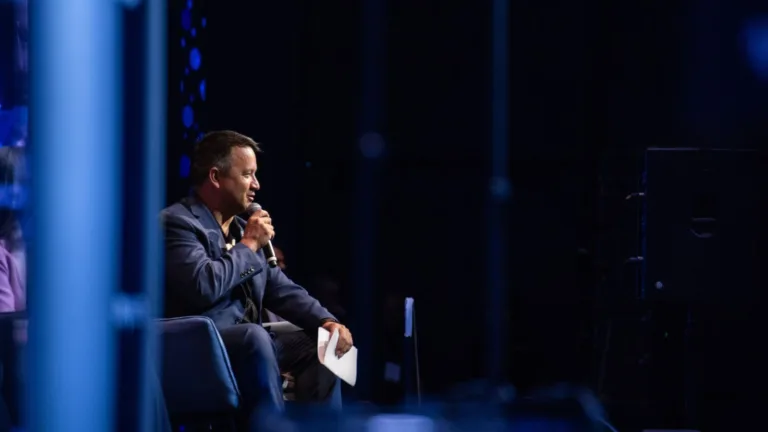
Four Indigenous leaders, one Alberta minister, and the head of the world’s first Indigenous-majority LNG project on what real partnership requires.
Andrew Robinson has heard the pitch enough times to know how it goes. A company walks into a Nisga’a Nation meeting, says it sees the work being done on Ksi Lisims LNG, and explains why it would be the right partner.
His first question back is rarely the one anyone expects.
“How many of you know who I am as a person? And where I come from under our modern treaty agreements? How many of you know that modern treaty nations make up 90% of the major projects approved by the Canadian government right now?”
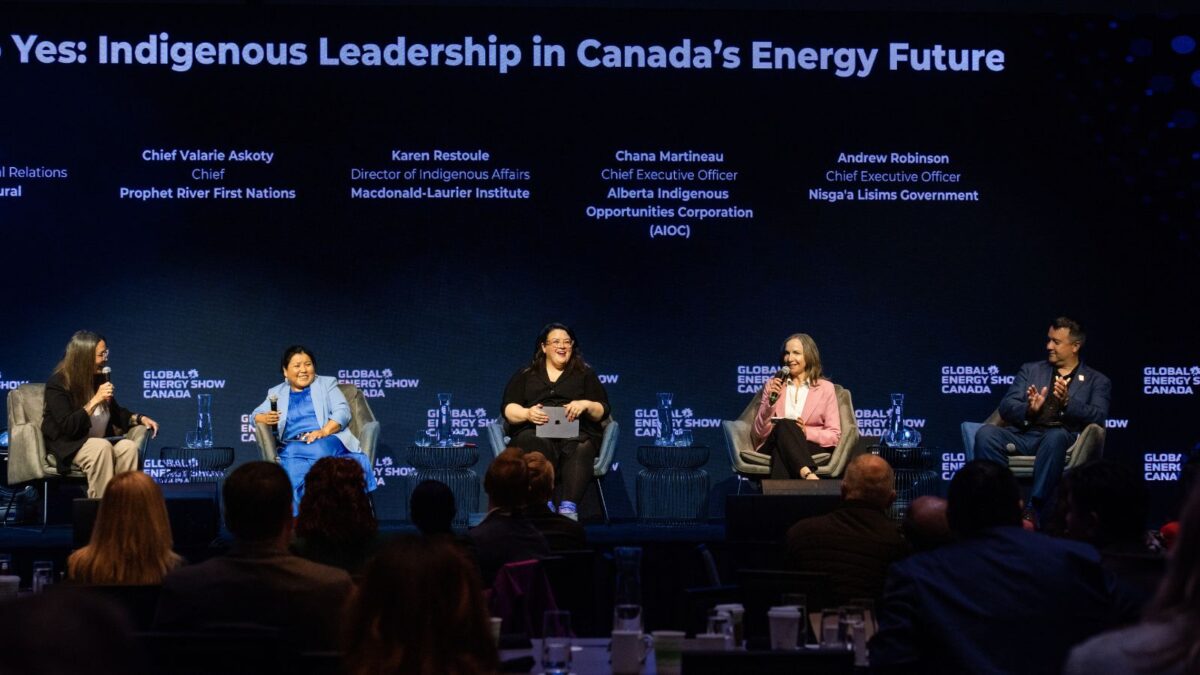
Robinson was telling the story at the Global Energy Show Canada in Calgary in June, on a panel called “Getting to Yes: Indigenous Leadership in Canada’s Energy Future”. It was moderated by Crystal Smith who spent eight years as chief councillor of the Haisla Nation and is now senior advisor at the First Nations Natural Gas Alliance.
Robinson is the chief executive officer of the Nisga’a Lisims Government, the Nisga’a Nation’s central government under its 2000 treaty with Canada.
In the 26 years since the treaty came into effect, the Nation has acquired the Prince Rupert Gas Transmission pipeline in a 50-50 joint venture with Houston-based Western LNG and become a joint venture partner in Ksi Lisims LNG, a floating facility on Nisga’a treaty land approaching its final investment decision this year.
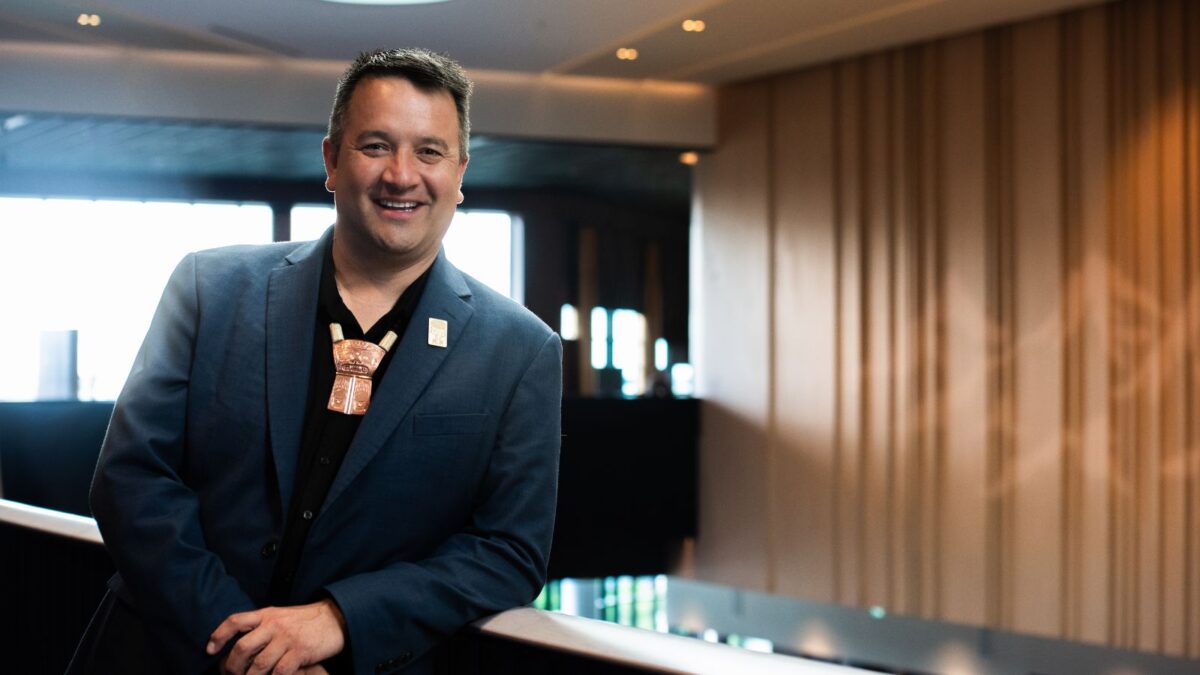
His point was about what the companies arriving with pitches typically haven’t done: they knew about the project, and may have credentials from elsewhere, but they had less idea who they were pitching to, what the Nation had built under the modern treaty, or what being a real partner would involve.
Robinson is not the only nation leader hearing the same pitch.
Canada is in the middle of the largest energy and infrastructure build-out in a generation, and lots is happening all at once. To name a few:
- LNG terminals are clearing final hurdles on the BC coast.
- Data centre proposals are reshaping power demand in Alberta.
- Pipeline routes are being negotiated for the first time in years.
In every case, Indigenous Nations are at the centre of the table. While some companies have built real equity partnerships, many more arrive with the project designed, the financial model built, and the timeline set, and they treat the nation as a step to clear rather than a partner in deciding what gets built.
Three other Indigenous leaders sat with Robinson on the panel: Chana Martineau of the Alberta Indigenous Opportunities Corporation (AIOC), Chief Valerie Askoty of Prophet River First Nation, and Karen Restoule of the Macdonald-Laurier Institute.
Each one, in their own words, was trying to tell the room the difference between the two approaches.
What proponents keep getting wrong
Chana Martineau, chief executive officer of the AIOC and a member of Frog Lake First Nation, described what she sees proponents bring to the table before they bring anything else: fear. She has sat through enough negotiations to know how often a deal falters before the difficult conversation has even started.
“A lot of proponents are super nervous,” Martineau said. “Everyone is really aware of our history of the contentious relations between, in particular, the energy industry. But other industries as well, and the First Nations communities, or the Métis communities. They’re driven with fear.”
The AIOC exists to put capital behind Indigenous communities so they can take real equity ownership in major projects.
“When I think about any relationship, how that relationship gets stronger is through hard times,” she said. “Don’t be afraid of the hard conversations. That’s actually what can pull you through and build a stronger relationship than you could have ever thought possible.”
Alberta’s loan guarantee program, which Martineau leads, has issued roughly $745 million in loan guarantees since 2019, with $3 billion in authorized capacity. The federal government and several other provinces now run similar programs, with combined capacity of roughly $17 billion across the country.
That fear, she said, takes the form of polite distance. Companies arrive ready to talk about benefits and impact. They are less ready to talk about decades of unmet promises, projects that left scars on the land, and agreements that were signed and then ignored. Those are the conversations that build trust, and without them the deal that follows has no foundation.
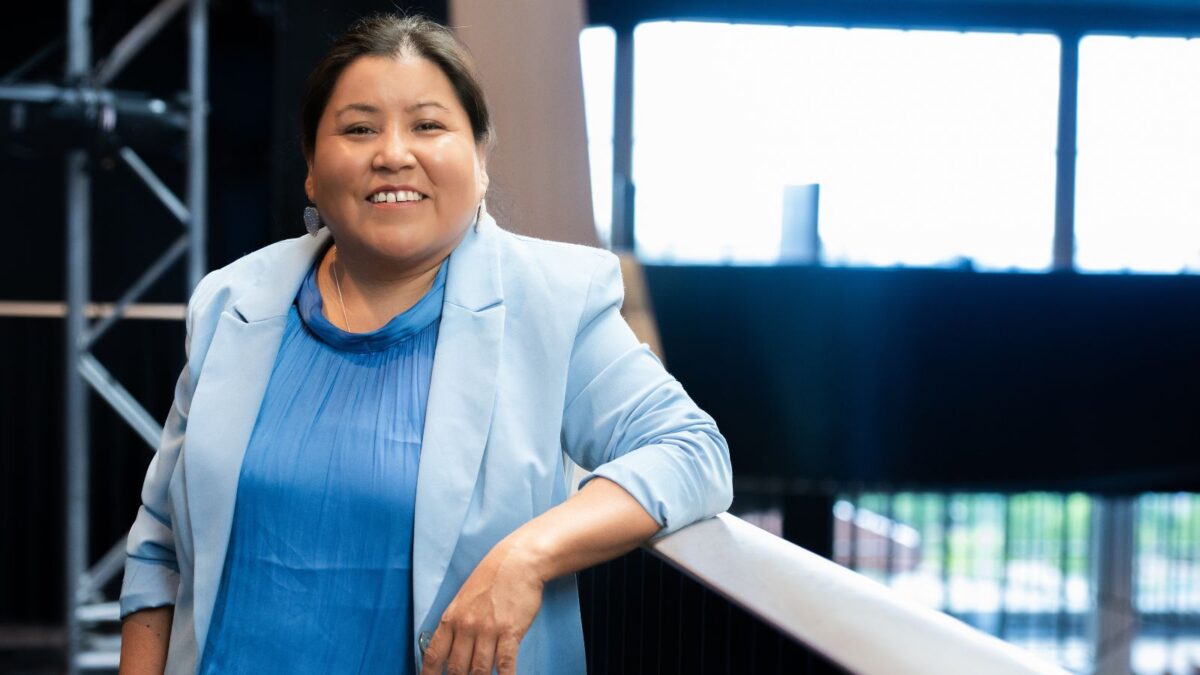
Chief Valerie Askoty of Prophet River First Nation in northeastern British Columbia made a related point from a different angle. Prophet River holds a gathering of drummers that is open to the public, and Askoty’s invitation at the panel was for industry to come.
“Getting to ‘yes’ means getting to know the nations that are going to be involved in these major projects,” Askoty said. “Going to their nation, seeing their cultures. Every nation is different, but seeing who they are as people. Come to the events, come to the cultural days, come to the Treaty Days. Please come and see who we are as people.”
Karen Restoule, director of Indigenous affairs at the Macdonald-Laurier Institute and a member of Dokis First Nation, has worked in Indigenous policy for two decades. When the panel turned to her, Restoule pushed back on the assumption that the obstacle to development is Indigenous nations saying no.
“In my 20-year career, I’ve never heard one single chief say in any room that I’ve been in, or even on social media, nobody has said ‘we want to keep managing poverty’,” Restoule said. “Nobody.”
Much of how industry approaches Indigenous Nations starts from an assumption: that the Nation will say no, that consultation is the obstacle, that the work is to win them over. Restoule’s whole point was that the frame was wrong from the start.
“Industry and government, my advice is we have to dig deeper,” Restoule said, adding that both groups should ask themselves what they are missing in these conversations. “It’s a question you should be asking yourselves every five minutes while you’re trying to unpack a challenge to a relationship that you’ve initiated.”
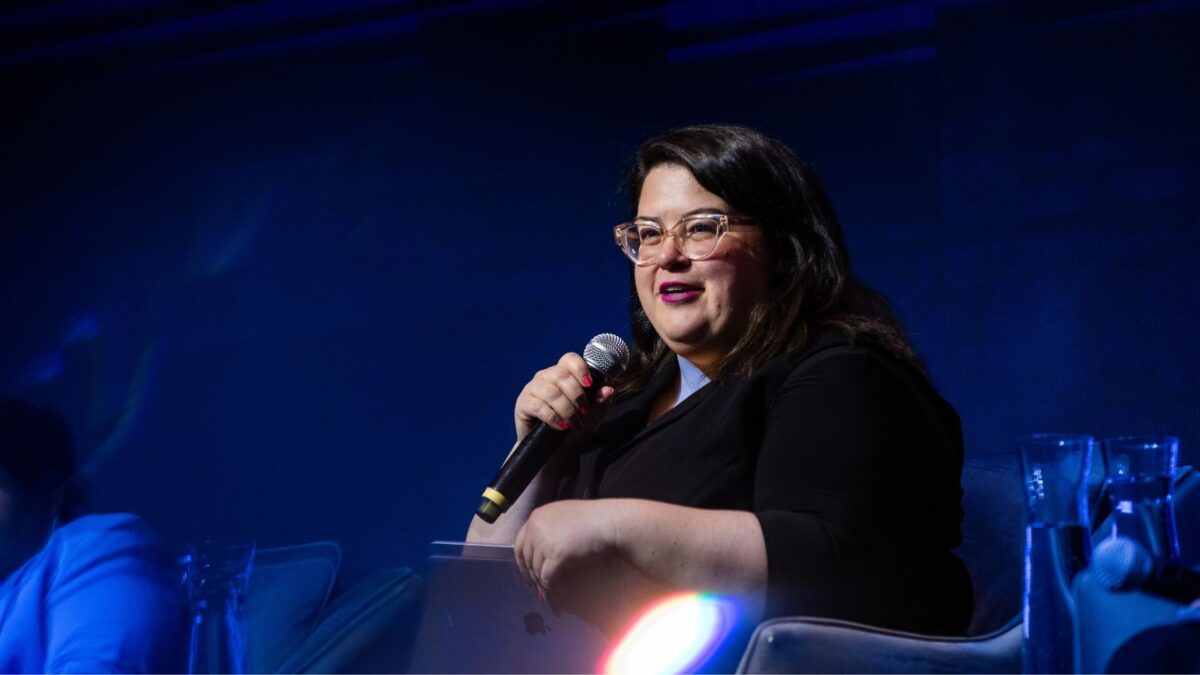
What looks like a no from a Nation, she said, might be the same kind of leverage business and government have used for as long as anyone can remember. The Nation has finally been handed a position that allows it to push for things that have gone unresolved for decades, with an unwilling partner across the table for most of that time.
She had an image for the kind of depth she was asking for.
“Move yourself to be a second- and third-layer thinker,” she said. “You’re too close to the painting. You step back one step, you see it differently, you step back five steps, you see it differently.”
Listen first, sit with what you hear
Some of what the panel was describing has been turning up in northwestern Alberta, in the work Mike Crawford has been doing for several years.
Crawford is director of Creating Shared Value at CSV Midstream Solutions, which operates six gas plants in northwestern Alberta. CSV’s footprint spans the Grande Prairie and Grande Cache regions and sits inside Treaty 8 territory. Signed in 1899, Treaty 8 is the largest treaty in Canada by land mass and covers most of northern Alberta along with parts of BC, Saskatchewan, and the Northwest Territories.
One of the first things Crawford learned was that most energy companies don’t make the trip to the smaller Treaty 8 community events, because the distance from any major centre is several hours and too many companies only show up when there is a deal on the table.
Years ago, Crawford got an invitation to the Treaty 8 125th Commemoration Celebration in a community north of Grande Prairie, and he made the drive. When he got there, he stood in a circle of attendees and Ramona Horseman walked over. Horseman was the chief of Horse Lake First Nation at the time, located near Hythe, AB, and served as Deputy Grand Chief of Treaty 8.
She asked him why he was there, surprised to see someone from industry show up. He told her he came because the invitation had been extended, and an invitation from the Nation was reason enough.
That moment became the starting point for how CSV has approached relationships with Indigenous communities ever since.
Early in this work, an advisor told Crawford that if you ask a Nation how you can help and then fail to follow through, you’ve confirmed you’re no different than anyone who came before. Crawford took that to heart. He listens first, sits with what he hears rather than answering on the spot, and lets the relationship develop on its own time. That is what Creating Shared Value looks like at the scale of a midstream operator working with the Indigenous communities next to its plants.
At a regional scale, it’s the same advice Martineau, Restoule, and Askoty were giving from the stage in Calgary: Don’t be afraid of the hard conversations, ask what you’re missing, and come and see who we are as people.
“We’ve been really slow in our approach,” Crawford says. “We’re not experts, but we’re being consistent because Creating Shared Value means we show up in a relationship, listen to what Indigenous communities need, and follow through.”
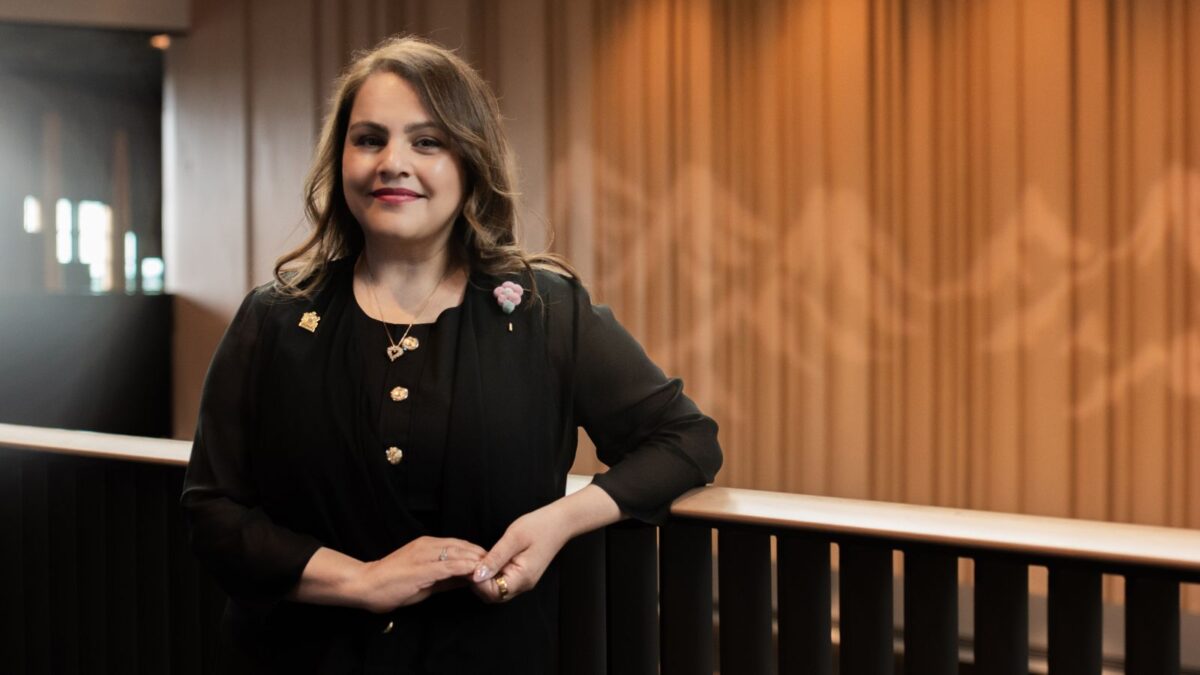
What ownership changes
Back at the Global Energy Show in Calgary, a different panel was making a related point from another angle, this one about how capital structure and ownership are changing for Indigenous Nations in major projects.
Alberta’s Minister of Indigenous Relations, Rajan Sawhney, opened the panel by setting out where Canada is in the move toward Indigenous ownership of major projects.
“We’re seeing a real shift in how major energy and infrastructure projects are being developed and implemented,” she said. “Indigenous partnership is no longer viewed as an add on. It’s becoming central to how successful projects move forward. What that looks like is changing quickly. More and more Indigenous communities are looking beyond participation alone. They are seeking ownership and a share in the long-term value that projects create.”
The Alberta Indigenous Opportunities Corporation, which Martineau leads, was built to make Sawhney’s point real. It provides loan guarantees that let Indigenous communities buy ownership stakes in projects they otherwise could not afford to enter.
BC and Manitoba are building their own versions of the program, and the federal program now sits at $10 billion. Across all of them, ownership is replacing royalties and one-time payments as the way Indigenous communities participate in major energy and infrastructure.
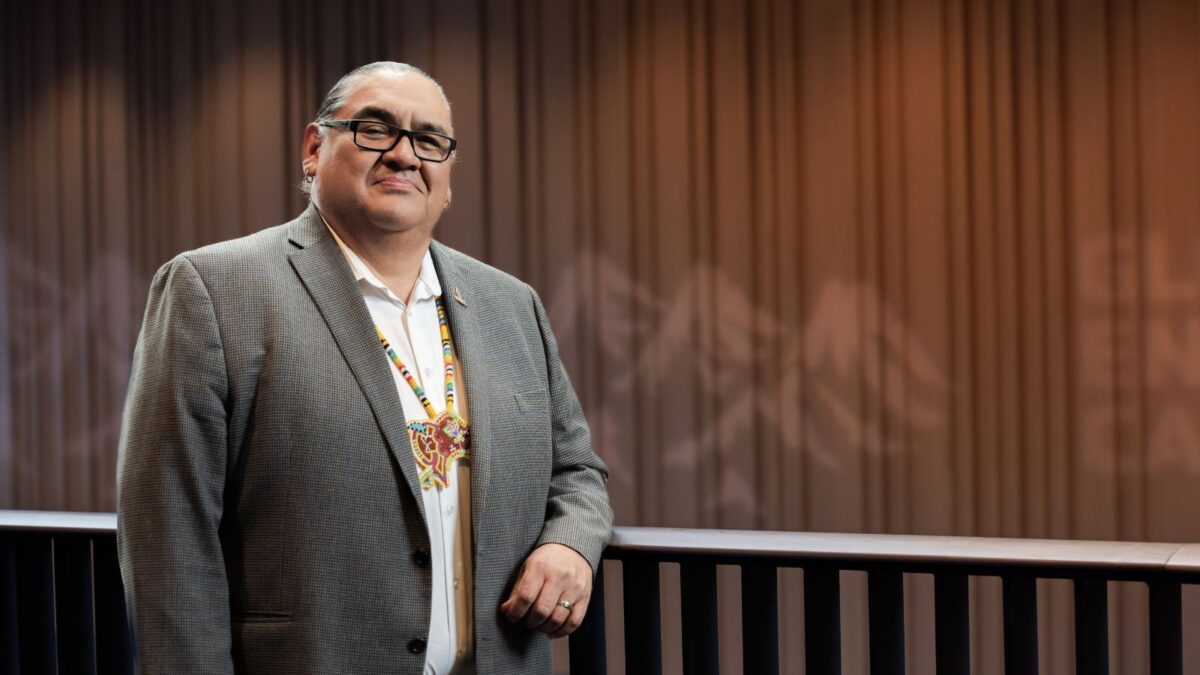
Stephen Buffalo, president and chief executive officer of the Indian Resource Council of Canada and board chair of AIOC, sat at the same table as Sawhney. He has worked with First Nations on resource development for decades, long before equity ownership was a serious option, and what struck him most was the difference between how long industry sticks around and how long a Nation does.
“Our politicians change,” Buffalo said. “Our CEOs, the companies change. We’re going to be there. We’re going to be there forever. So if we all work together, we’re going to do a lot of good things together.”
Buffalo has watched CEOs who promised partnership leave before projects were built, and ministers who championed programs get replaced by ones who didn’t, while the Nations stayed. The loan guarantee model is built to outlast the people who signed the deal, because ownership stays with the Nation when everything around it changes.
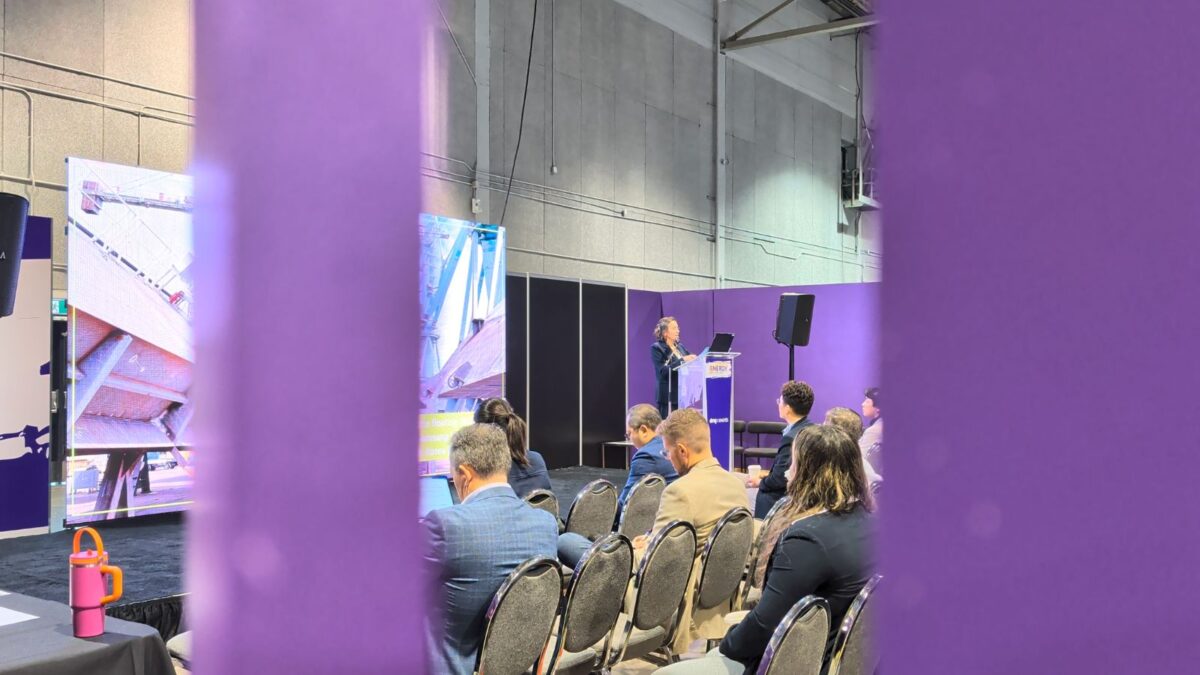
Inside the Cedar LNG deal
Cedar LNG is the largest Indigenous-owned energy infrastructure project in Canada and the world’s first majority Indigenous-owned LNG facility. The Haisla Nation owns 50.1%, with Calgary-based Pembina Pipeline Corporation holding the rest. The project reached a positive final investment decision in June 2024, and ARC Energy Research Institute says cargo is expected in late 2028.
In a session at the Global Energy Show, Maureen Nyce, the Haisla Nation’s Elected Chief Councillor, described how the project came together.
The Haisla had spent more than a decade weighing options for development on the west side of the Douglas Channel. Refineries, oil, propane, methanol, and LNG had all been proposed to them. The Nation’s leadership educated themselves on the social and environmental risks and tradeoffs of each option before bringing the question to the community.
LNG carried the lowest impact, and the community gave its backing.
The Haisla Nation then negotiated 400 million cubic feet a day of gas-supply capacity off the existing Coastal GasLink Pipeline, which meant they would not have to build a new one to feed Cedar.
They also decided the facility would use air cooling rather than water cooling to protect the marine environment.
With the project shape settled, the Haisla went looking for a partner that could build it, and Pembina was the company they chose.
“When we’re looking for a partner, it was more us looking for a partner than the partner looking for us,” Nyce said. “It was us looking for a partner that aligned with who we are, how we operate, how we use our land, and how we respect our land.”
A majority of operational jobs once the plant is running are targeted for Haisla Nation members, supported by apprenticeship and training programs the Nation set up in advance. Revenue flows directly into housing, language preservation, education, and healthcare programs the Nation runs without relying on federal or provincial funding.
What the Haisla Nation built is the case Indigenous leaders had been making to industry through the conference. A project that starts with the Indigenous communities looks different from one that starts with the proponent.
