
24-HOUR EMERGENCY LINE: 1-844-808-4904
Before Alberta builds its next industrial era, it has to get the community behind it
Alberta’s gas infrastructure is ready for the data centre era. The companies that get it right are building community trust before they break ground.
It was a beautiful evening in May. Things were running smoothly until about 8 p.m. when the sun started to set. At the exact same time the wind died off sharply, and the province nearly ran out of power.
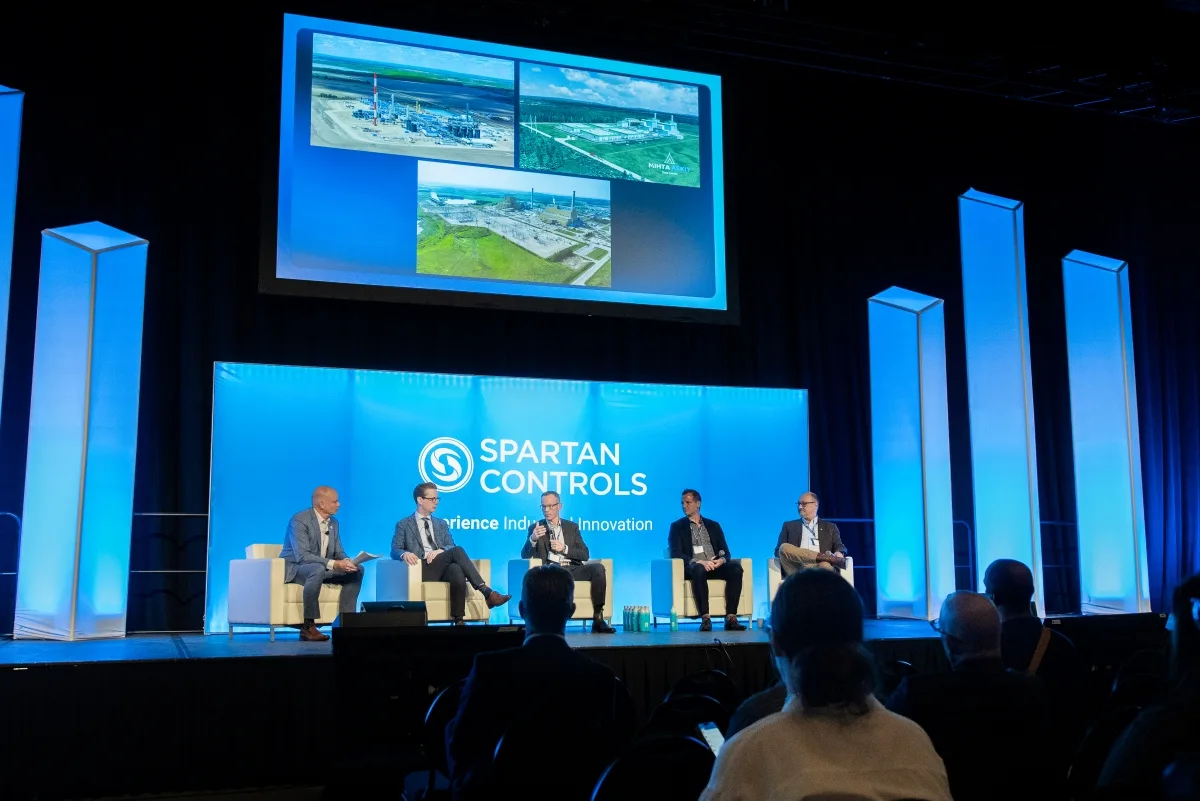
Chris Fralick, Executive Vice President of Generation at TransAlta, told that story at Experience Industrial Innovation, a two-day Calgary conference in May where engineers, technologists, researchers, and policymakers gathered to talk about the future of industrial development in Alberta. The event is produced and hosted by Spartan Controls.
It also happened to be the time of year when some gas and coal plants go offline for scheduled maintenance, so there was less backup available than usual. With renewables down and backup capacity reduced, the system came up short.
Fralick wasn’t describing a crisis so much as a lesson.
Alberta is generally what he calls “long power,” meaning the province usually has more generation capacity than it needs, but that flexibility is only as reliable as what’s still running when the weather changes. Natural gas is what holds when everything else drops.
That reliability is now attracting a new kind of demand that needs power around the clock, every day, regardless of what the weather is doing.
That demand is data centres.
The growth of AI and cloud computing has made them one of the most power-intensive industries on the planet. Alberta, with its gas resources and available land, has become one of the most watched destinations for that investment.
Data centres are everywhere in Alberta conversations right now, from municipal planning tables and community meetings, to Indigenous nations and private equity boardrooms.
Alberta’s Minister of Technology and Innovation, Nate Glubish, told the conference the province has more than 33 data centre projects queued for grid connection, representing more than 20,000 megawatts of potential demand, with major investment decisions expected before the end of 2026.
Most of that conversation is still about what could happen, not what is being built right now.

Gas in, data out
Spartan Controls has been supplying the instruments, valves, and automation systems that run industrial facilities across Western Canada for 64 years.
Doug Ndegwa, its President and CEO, has watched the company serve one major energy transition already, as LNG reshaped the region’s export story over the last decade. The demand for data centres to power artificial intelligence is bringing another.
“Two years ago, we weren’t talking about AI,” Ndegwa told Rooted in an interview at the event. “Now that’s the only conversation people seem to want to have.”
Glubish told the conference that the province has allocated 1,200 megawatts from the existing grid to start (roughly enough to power 165,000 Alberta homes continuously) and developers are required to bring their own generation rather than draw from the shared grid.
Renewables can’t guarantee the around-the-clock supply a data centre requires, and nuclear and hydro are decades away at the scale needed.
Natural gas is what keeps the lights on, and the companies that have spent decades designing, building, and operating it in this region are the ones being asked to deliver it at data-centre scale.
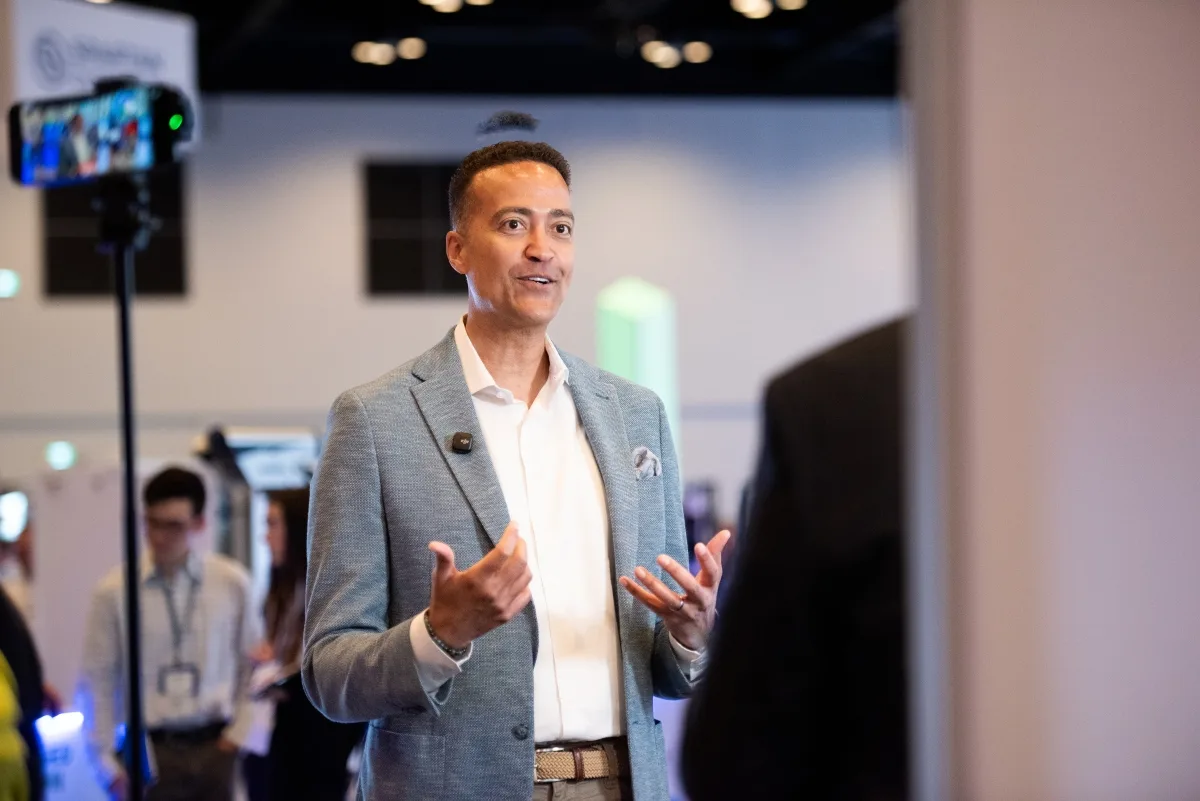
“We can capitalize and ride this wave,” Ndegwa said.
He was responding to a question about what it feels like to be in this moment where a massive and sudden convergence of new technologies and industrial opportunities are hitting the region all at once.
“We’ll do it the right way, the way Western Canadian businesses always have. I’m excited about what’s coming because we’ve got so much skill and capability. We haven’t built things for a while, but we are all ready, willing, and able to start building things again. I think it’s a phenomenal time to be in Western Canada, and in the industries we serve.”
What gets built matters less than how it’s done
Near Peace River in northern Alberta, Shell invested billions in a heavy oil development called Carmon Creek. In 2015, citing low oil prices and a lack of pipelines to coastal markets, the company walked away and the partially developed site sat largely dormant for a decade.
Now, it’s the proposed location for Mihta Askiy, a 650-megawatt data centre campus being developed by Sovereign Digital Infrastructure in partnership with Woodland Cree First Nation, which holds a majority ownership stake in the limited partnership that will own and operate it.
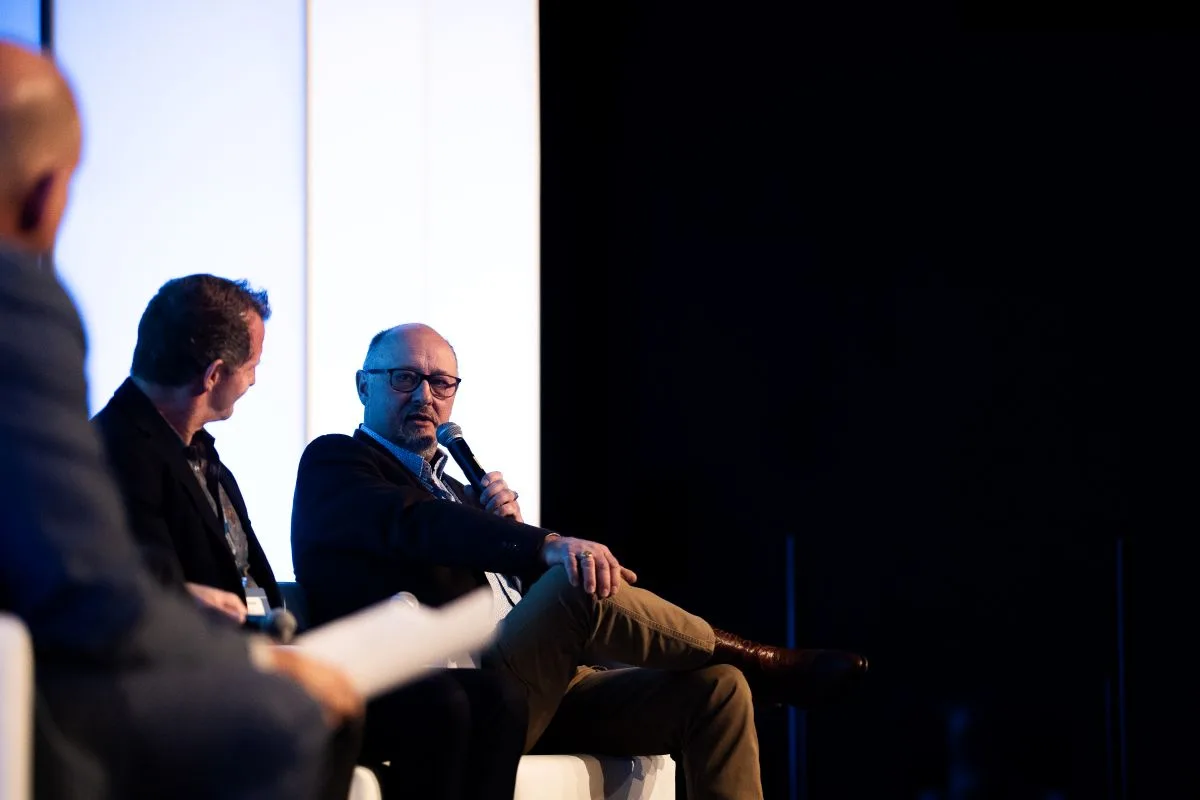
Darin Watson, who leads engineering and construction at Sovereign Digital Infrastructure, described the community context at the conference.
“Peace River strikes me as a little bit of a depressed economy,” Watson said. “When Shell pulled out of there, that was a $10-billion investment. With the challenges that forestry is having, that community is also looking to maybe lose a significant employer in the pulp mill, so they’re quite on board,” he said about investment returning to the region.
Watson also said his team is working with the community to design a curriculum for the local college covering every skill set needed to run the operation because local people want to keep their families close to home.
“That’s a big deal in the Indigenous circles,” he said.
The power plant alone will cost roughly $1.4 billion. Watson has a name for facilities designed around short-term supply chain availability rather than long-term performance.
“I’m a little worried about some of the developments I see,” he said. “I’ve coined the term ‘Frankenplant’. People are designing projects that aren’t really the best project. They’re designing around what they can get in a short period of time. It’s very short-term thinking, and that concerns me a lot.”
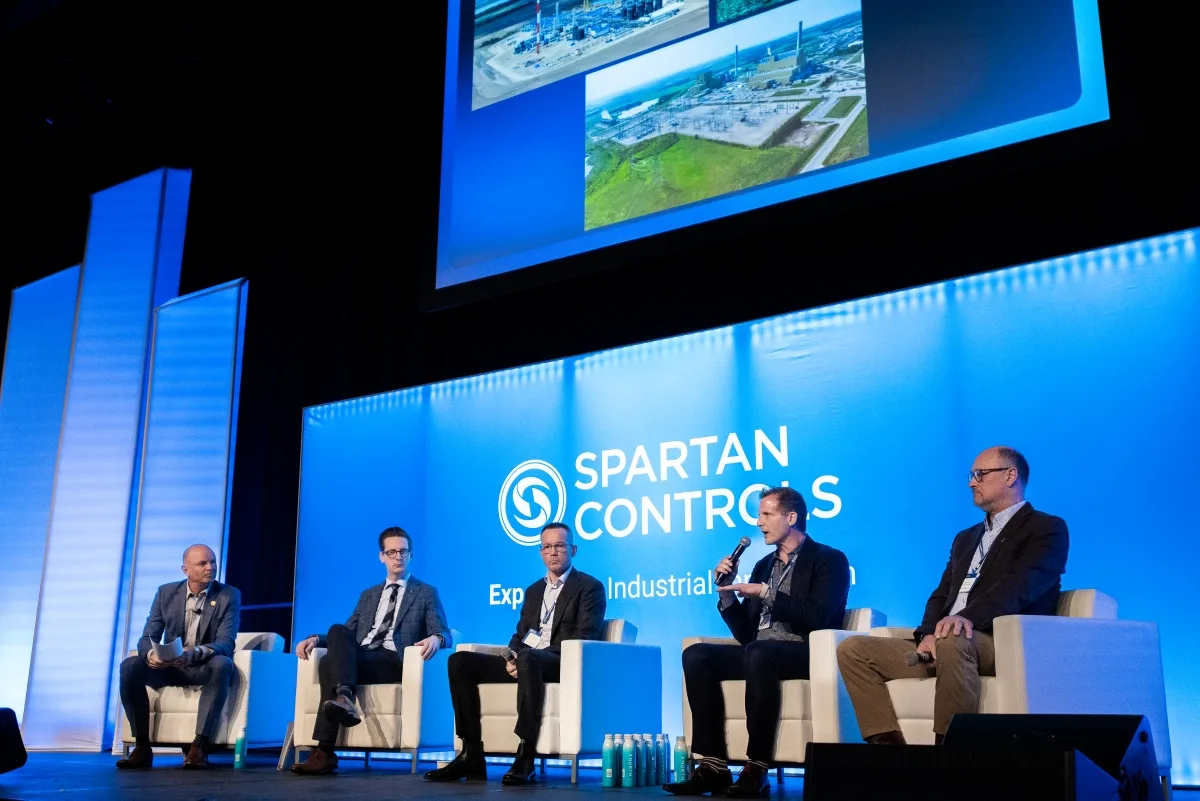
Daniel Clarke, President and CEO of CSV Midstream Solutions, spoke at the opening of the conference and said the industry’s first obligation is to understand its impact on the communities where it builds.
“The minute that we conceive a project, we are looking through the lenses of who we are impacting, where we are going to be locating a project, and what matters in those regions,” Clarke said on stage. “We think about people, we think about the region, we think about the history, we think about how people come together.”
That means being honest about what a project takes and not just what it delivers.
“We largely talk about the outcomes that are positive,” he said, speaking on behalf of the energy industry writ large. “But a lot of times we do not reflect on what the negative impacts are. Creating Shared Value is about learning about people, learning about places, learning about the Indigenous history, learning about the challenges that we’ve had in the past, and the opportunities that we see within those challenges to create a better future.”

Clarke has also watched enough projects move from proposal to operation to know what actually determines whether they get there.
“For good businesses, there’s always capital available,” Clarke said when asked a question about what investors are looking for. “But if you can’t get the community to buy into [a project], then it doesn’t even start. That’s what capital is telling us. Give me the certainty that it’ll get done. It’s your job to get the community behind you.”
For CSV, that work starts long before construction.
Clarke described an Indigenous elder telling him that relationships are built at the speed of trust, and that communities will only support a project if they believe the developer cares about what they care about. That doesn’t start at boardroom tables. It starts in kitchens, coffee shops, or by knocking on people’s door to have a conversation.
He gave an example of personally standing in a landowner’s yard in the middle of winter to listen to every frustration while the landowner watched to see how long he’d stay.
“That day started a relationship,” Clarke said, “because I stayed there and damn near got hypothermia from it.” It was a show of care and respect, and a willingness to do what it took to hear what mattered to the landowner.
The communities around CSV’s facilities want to know about how development impacts traffic, for example, or what it offers their grandchildren who will live in a region.
The energy industry learned those lessons over decades and sometimes the hard way, through projects that never got built and communities that stopped trusting developers who never asked what they cared about.
Clarke’s argument is that the data centre industry doesn’t have to learn them the same way. Creating Shared Value is the framework, and the work is knowing how to use it.
