
24-HOUR EMERGENCY LINE: 1-844-808-4904
What astronaut Chris Hadfield and a brave nine-year-old showed about building energy’s next workforce
Alberta needs a new energy workforce, and the people who could fill it are deciding based on a picture that’s a decade out of date.
In 1992, the Calgary Herald printed a want ad for an astronaut between one for an architect and one for a baker. It required a Canadian citizen, a bachelor’s degree, and a hard physical. Chris Hadfield was one of about 5,300 people who applied, and the Canadian Space Agency picked him.
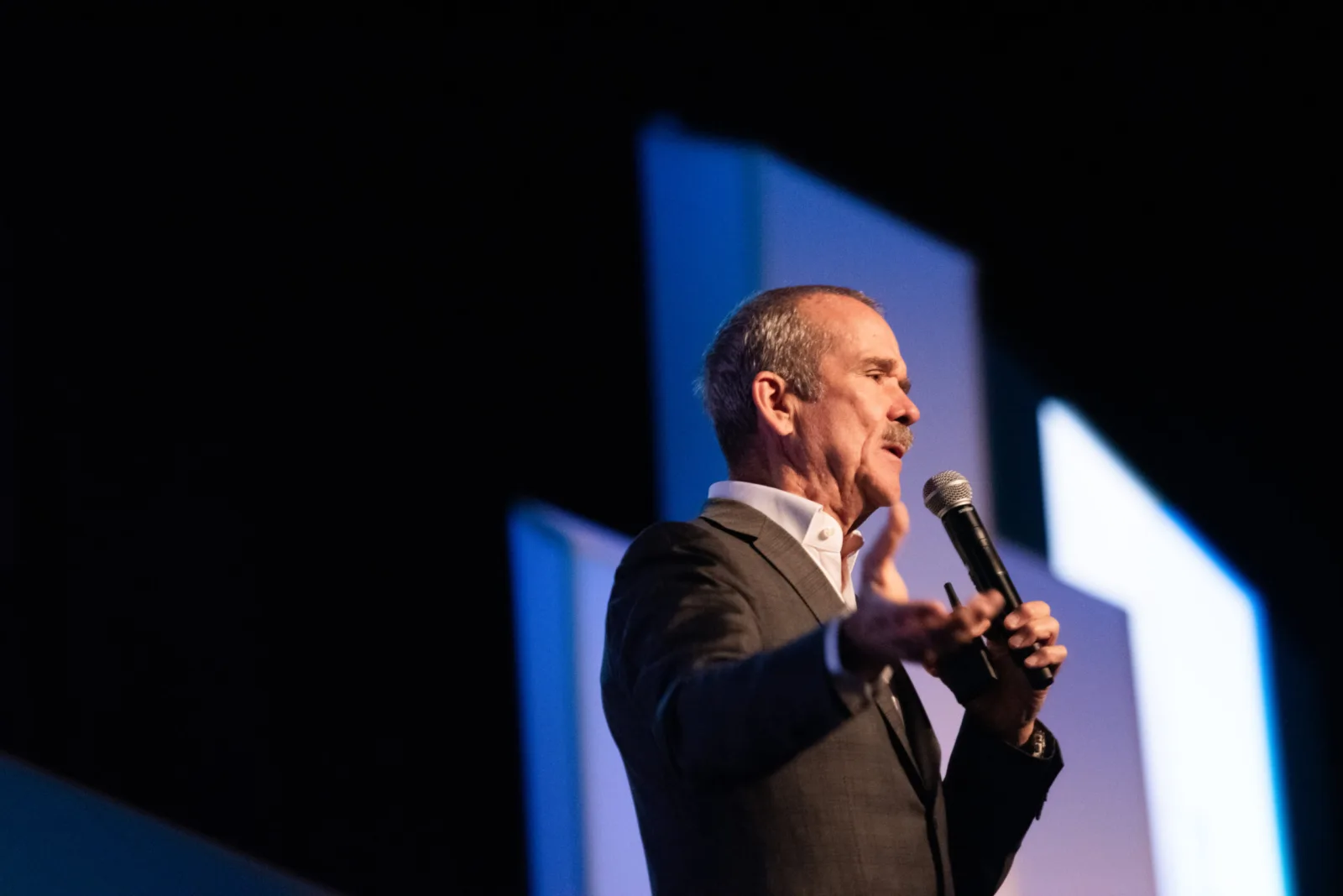
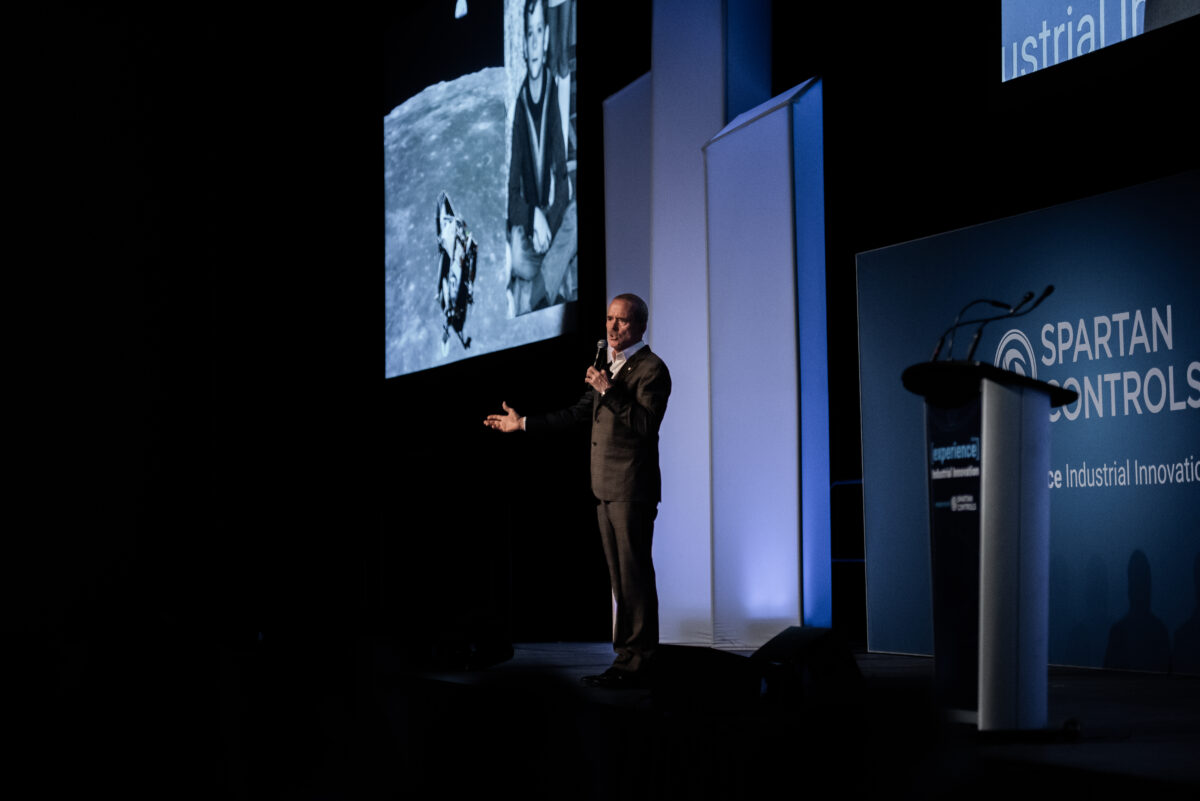
More than three decades later, Hadfield stood on a Spartan Controls conference stage in Calgary and told a room of engineers, executives, and operators from Alberta’s energy sector about the people who had to invent his job first.
“If you really want to change something significant, imagine the change that each one of them had to make within themselves when they were born,” Hadfield said. “The word astronaut didn’t even exist. They had to develop a skill. There was no manual for enormous personal change.”
When he opened the floor to questions at the conference, a hand went up in the front row belonging to a nine-year-old boy who wanted to know whether a person can still walk after coming back from space.
“Do you mind standing up here on stage with me? Are you brave enough?” Hadfield asked the boy. “Grab my hand, and we’ll jump up.”
He reached down and vaulted him onto the stage with one arm, leaned in to ask his name, then looked up at the crowd.
“So, this is Vander, everybody. He’s really brave,” Hadfield said to the crowd.
He spent the next several minutes explaining to a nine-year-old and to a thousand adults what six months of weightlessness does to a body, with no sugar coating. The heart shrinks when it no longer has to lift blood against gravity, he said. Muscles wither, and the skeleton gives up the calcium it decides it no longer needs. When you land back on earth, you lose your ability to tell which way is up, and you feel dizzy and wrung out.
Then he asked Vander to close his eyes as he gave him a small nudge. The boy stayed upright, without falling over.
Hadfield laughed, pointing out to Vander that he has a “really cool system” inside his body that helps him keep track of which way is up. Coming home from space, he explained, means that system forgets how to do its job, and you have to learn to stand again.
Hadfield did not give Vander a simplified version. He told the nine-year-old what the work does to a body, in detail, and Vander stayed on stage for all of it. Vander asked what the job takes, and Hadfield answered him honestly.
Alberta’s energy industry is being asked to do the same thing now, at a far bigger scale, as the country turns back toward building. Over the past two months, CSV’s digital publication, Rooted, has been present as the province’s leaders described what’s coming.
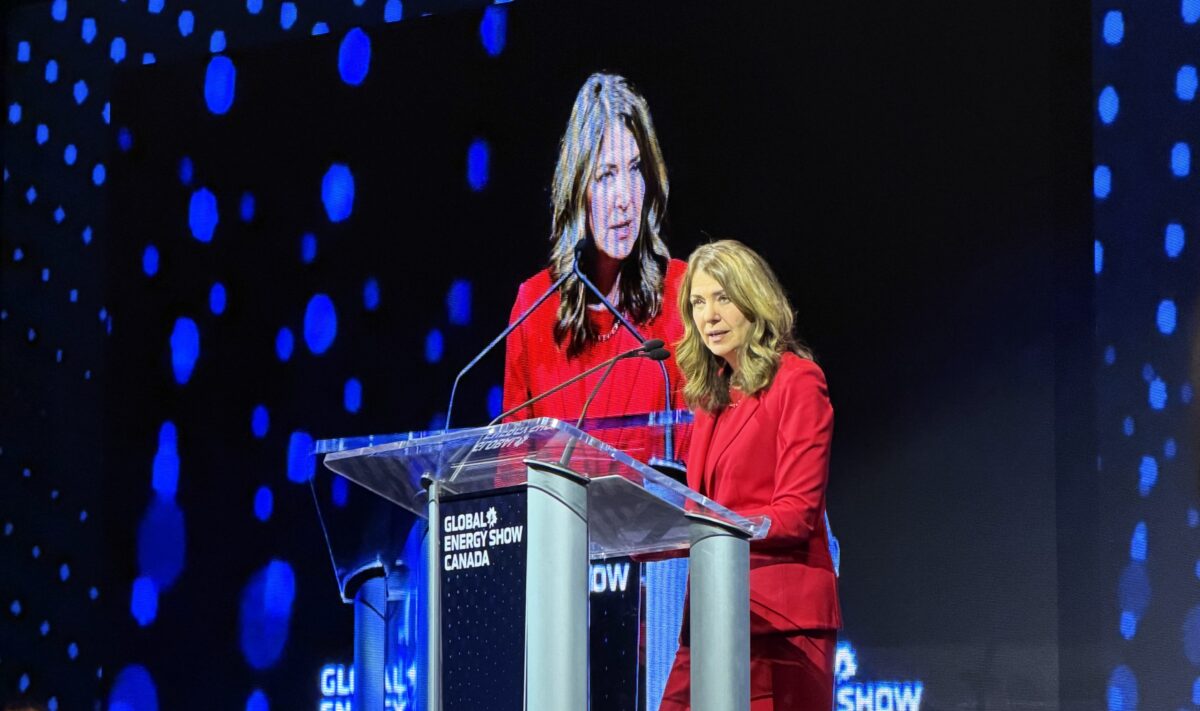
At the Global Energy Show in Calgary in June, Premier Danielle Smith laid out a doubling of oil production and the single greatest expansion of pipeline capacity in decades. Across the province, AI data centre campuses are being planned, several of which would draw power around the clock.
A report released in June by Careers in Energy, a division of Energy Safety Canada, found that Canada’s oil and gas sector will need about 72,000 workers by 2035, and more than 100,000 if the major pipeline projects proceed. Most of those openings come from a wave of retirements that begin around 2027, and the roles hardest to fill are the ones that take years to train.
The shortage is real, and so is something the announcements rarely mention: the people who could fill those roles are still deciding whether this industry is one they want to build a life in, and what they believe about it is often a decade out of date.
When people see the real thing, they want in
The people the industry needs are forming an opinion of it from the outside, and there is evidence that a closer look changes it.
After taking a course on how modern energy actually operates, more than 80% of post-secondary students surveyed in late 2025 said they were more interested in an energy career, according to the group that ran the program. Enrolment ran past its target six months early, with students from the University of Alberta, the University of Calgary, and the Northern Alberta Institute of Technology among the largest groups signing up.
We heard the same from a young CSV employee.
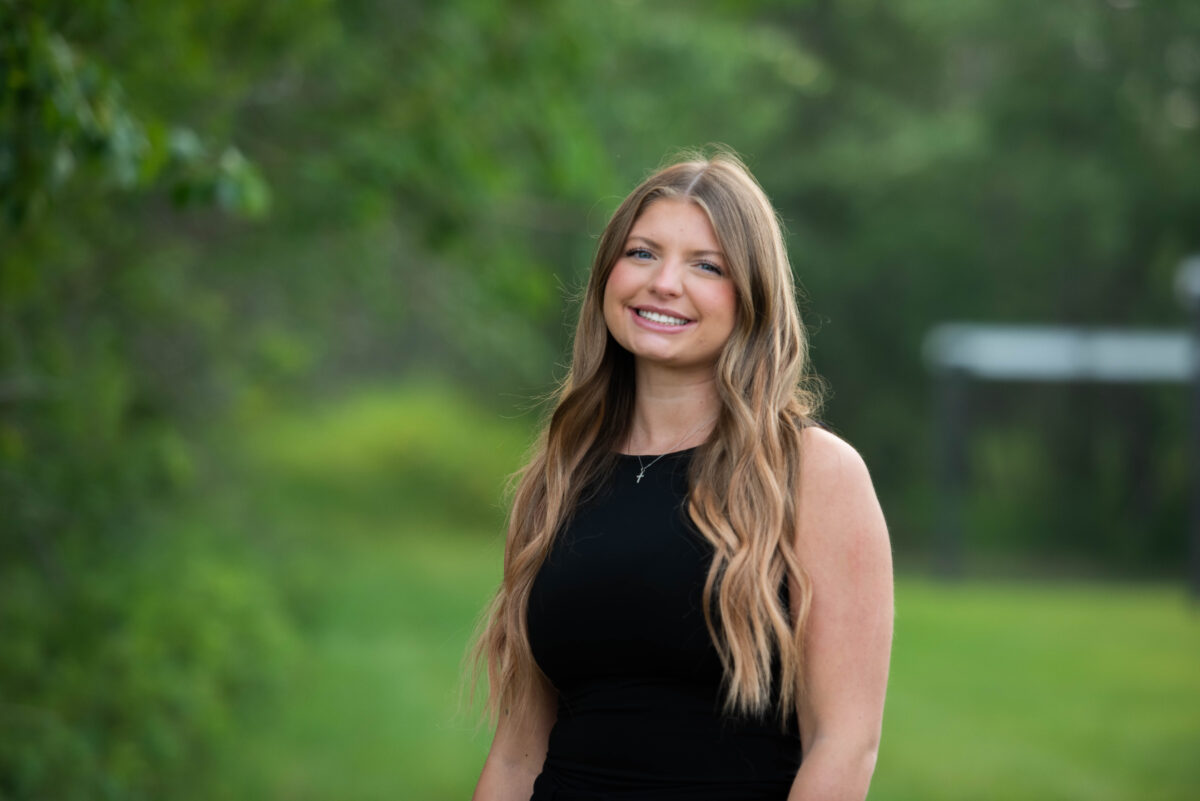
When 23-year-old Brooklyn Clarke came to work at CSV Midstream Solutions, she initially had no plan to work in energy and came in with the outsider’s view of the industry that is out of date.
“I honestly never thought twice about it,” Clarke told Rooted in an interview in Grande Prairie. “I was never like, oh, I can see myself in energy and oil and gas. But now being in it, I’ve grown such a respect for it.”
Her own view came around once she was in the work. The people around her still held the old one. When she mentioned the Creating Shared Value Fund that gives a portion of annual revenue from CSV’s Albright gas plant to community projects around Grande Prairie, a friend wrote back that it sounded like a payoff to get a pipeline through a farmer’s yard, Clarke said.
Except, the fund has nothing to do with pipeline access. It returns a portion of the plant’s revenue annually to community projects chosen by an independent local committee outside CSV, an example of what CSV means by Creating Shared Value. Her friend had assumed the worst without knowing how any of it worked.
Clarke came to energy without expecting to, and more young people are choosing the skilled trades that keep it running. New apprenticeship registrations across Canada rose to a record 101,541 in 2024, according to Statistics Canada, with rising numbers of Alberta pipefitters, steamfitters, and electricians among those driving the increase.
The picture most people hold is a decade out of date
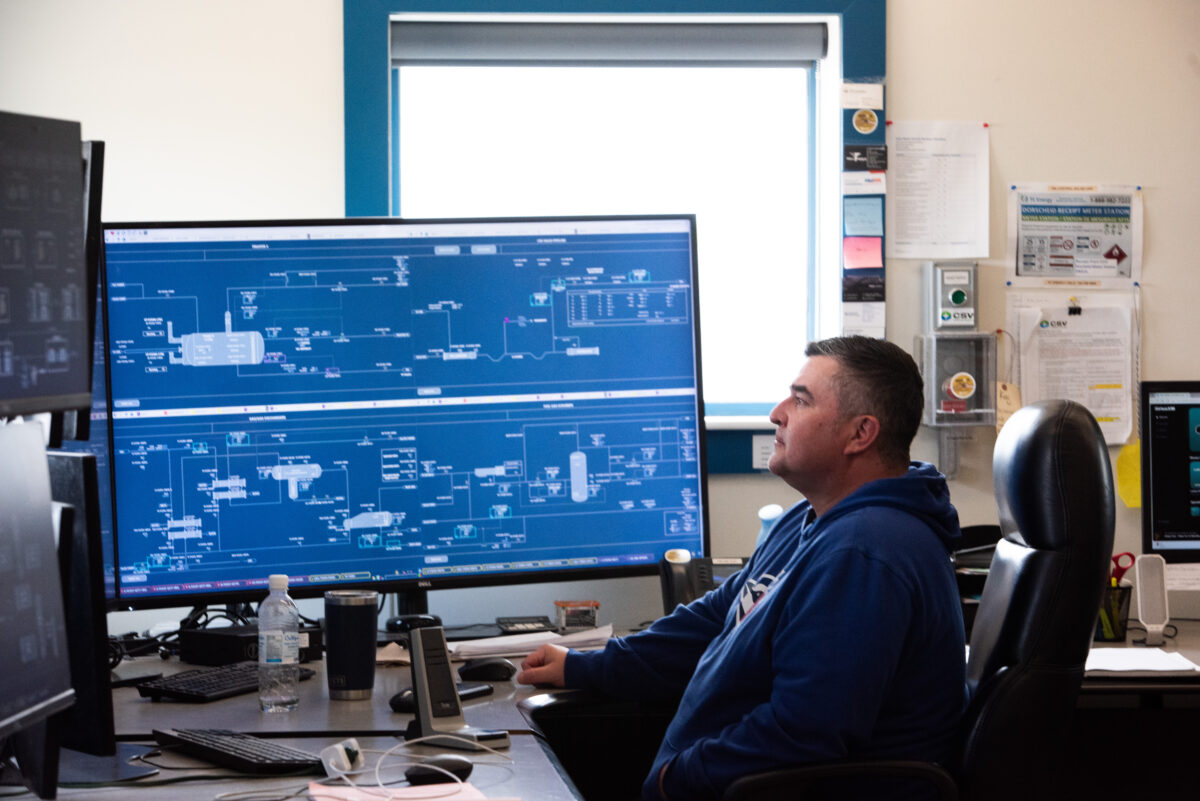
Ask someone outside the sector to describe energy work and you tend to hear the same things: wrenches, diesel, a rig somewhere cold, an industry running out of time. Each of those has changed over the past decade.
Start with the idea that the work is going away. In its most recent World Energy Outlook, the International Energy Agency projected that global natural gas demand will keep growing for decades, a notable revision from the year before when it had expected a faster decline.
Then the emissions record.
Alberta cut methane from its oil and gas sector by about 51% between 2014 and 2024, according to the Alberta Energy Regulator. The province met its 45% reduction target in 2022, three years early. In June 2024, the last coal-fired power plant in the province converted to natural gas, completing a coal phase-out more than six years ahead of schedule.
Those reductions came from investing in technology and innovation, including better leak detection, retrofitting and replacing older equipment, and capturing gas that would previously have been lost.
And the reductions at home are only part of the bigger picture, as the gas Alberta produces is also becoming an export commodity.
In June 2025, LNG Canada shipped the country’s first cargo of liquefied natural gas from Kitimat, British Columbia, fed by gas from northern Alberta and B.C. It was the largest private investment in Canadian history, and it opened a direct line to Asian buyers about 10 days away by ship, half the distance from the U.S. Gulf Coast.
A December 2025 report from the Canadian Chamber of Commerce found that Canadian gas displacing coal in Asia could lower global emissions by 40 to 70 million tonnes a year, roughly the equivalent of taking nine to 15 million cars off the road.
The work itself has changed just as much.
Most of the upcoming openings arrive as an older generation retires and the pipeline projects add new demand, leaving a shortfall the Careers in Energy report pegged as high as 100,000, and the jobs left to fill look nothing like the old picture.
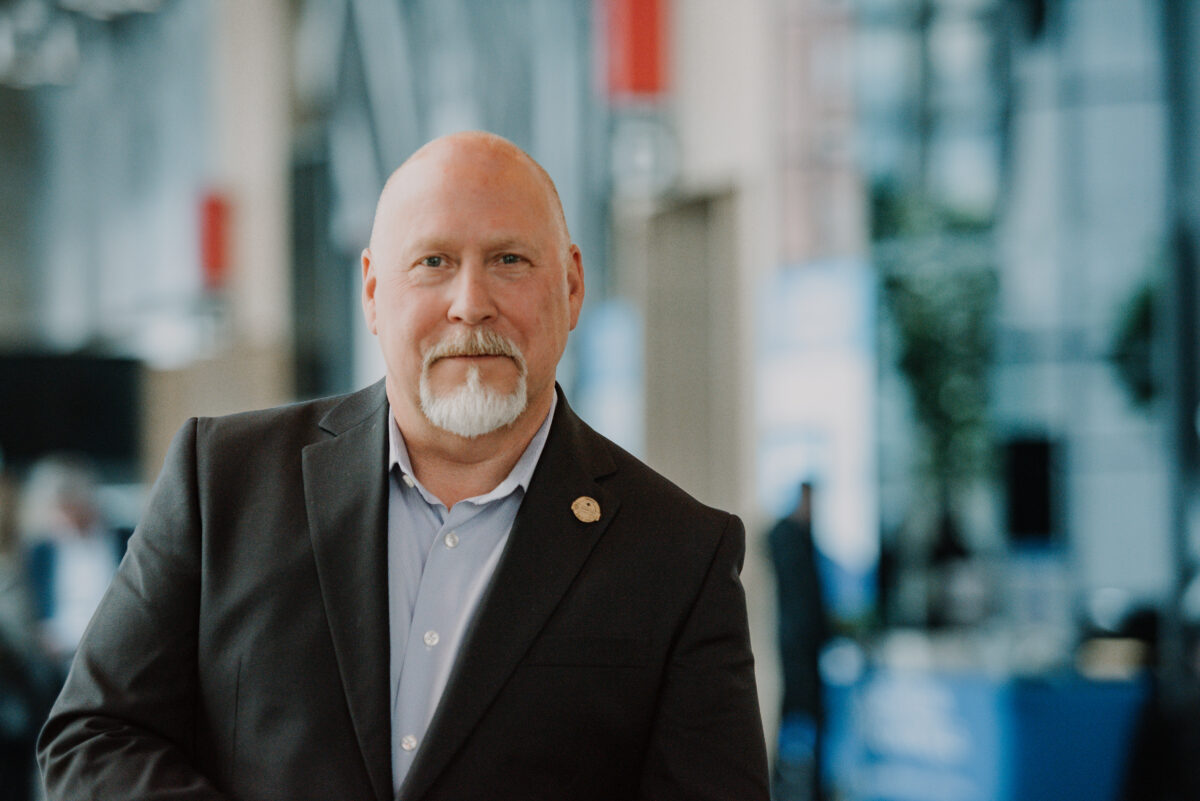
Jim Parsons of Spartan Controls, which supplies automation and process systems to facilities across the Peace Country, said the sector is leaning on technology to do more with a limited pool of trained people, and to capture what the retiring generation knows before it leaves.
“We’re now building large language models into the software platform, so that the operator can ask the AI the questions that are needed to understand what’s going on at the facility,” Parsons told Rooted at the company’s Experience Industrial Innovation conference in May.
Asked what building a career in energy looks like for a 22-year-old in Grande Prairie today, Parsons pointed to how the work is taught and done now. A technician who once learned to diagnose a problem by physical feel can now do it with data and tools.
“Where you were trained on how to diagnose using physical senses, now we can diagnose using the digital senses,” Parsons said.
None of this is new territory for oil and gas, which has long run on technology, from automated process control to remote monitoring across plants and pipelines. What has changed is the pace, as AI moves into work that not long ago was done by hand.
The people who do this work were not born ready for it
Chris Hadfield wasn’t born an astronaut. He decided to become one, and spent decades getting there.
He watched Neil Armstrong, Buzz Aldrin, and Mike Collins reach the moon in July 1969, one out of every three people on the planet tuned to the same broadcast that day.
“I looked at them and I thought, if they could do this thing, then why can’t I?” Hadfield said.
He got his glider licence before his driver’s licence. He joined the Royal Canadian Air Force, trained as one of the country’s first CF-18 pilots at Cold Lake, and flew Cold War intercepts before the astronaut posting ever appeared. Each step remade him into someone closer to a job that did not yet exist for Canadians.
“If there’s one common characteristic of astronauts, it is like a perpetual dissatisfaction with your current level of competence, an absolute burning need to get ready and better at stuff,” he said.
Hadfield’s argument was that young people need local role models and access to inspiration to choose hard technical work, the same pull Alberta is counting on to fill its energy jobs. He pointed to two Canadians in the current class of astronauts, both from Alberta.
Jenni Gibbons grew up in Calgary, and her single mother took her to the city’s science attractions. She went on to get a doctorate at Cambridge, and a career in combustion science. This year she was the voice of mission control guiding Canada’s Jeremy Hansen and the Artemis II crew around the moon.
Joshua Kutryk grew up on a farm near Fort Saskatchewan, flew as a test pilot, and is set to launch to the International Space Station this year on his first spaceflight.
“None of them were born that way,” Hadfield said. “Every single one of them was inspired by where we’re living in history and the opportunities that are out there. And then had great personal resolve to turn themselves into somebody different.”
The people who will run Alberta’s plants and pipelines start the same way. Not born to it,but drawn in by seeing what the work is and motivated by the opportunity to do the work and make an impact.
The work is here, and so is the choice
The scale of what Alberta wants to build is not in question.
At the Global Energy Show, Alberta Premier Danielle Smith described a west coast pipeline moving through the federal Major Projects Office, with construction targeted as early as September 2027 and roughly 114,000 jobs attached to that project alone. She pointed to Enbridge, Trans Mountain, Pembina, and ATCO advancing expansions at the same time, and called it the single greatest expansion of pipeline capacity in decades.
Jeff Lyons, the Deloitte executive interviewing her on stage, said the planning stage was over.
“It’s no longer a vision conversation,” Lyons said. “It’s an execution conversation now.”
National Bank chief economist and strategist Stéfane Marion made the same point, describing a window for Canada to rebuild its industrial base while global capital looks for somewhere stable to go. The projects are approved, the money is moving, and the plans now just need a workforce to line up behind new opportunity.
That was where Hadfield left the room. He closed on the number he had opened with, that a person gets roughly 30,000 days in a life, and asked everyone listening what they wanted to do with the ones they had left.
“What are you going to do next?” he asked.
It is the question in front of Alberta’s energy industry too. The work is here and the jobs are coming, ready for the people who see everything this industry now offers and choose to build a life in it where they can truly make an impact.
Vander had gone back to his seat by then. He had stood in front of a thousand people and asked what it costs a body to do the hardest thing he could imagine, and he had listened to the whole answer without flinching. Nearly all of his 30,000 days are still ahead of him, more than enough to become one of the people who builds what Alberta is planning.
