
24-HOUR EMERGENCY LINE: 1-844-808-4904
Where Alberta stands in the race for AI data centres and infrastructure
By Sarah Coleman, Editor-in-Chief, Rooted
On a clear September afternoon, a helicopter lifted off from Grande Prairie and banked south toward a vast stretch of northern Alberta forest.
Inside the helicopter were international developers touring a site the Municipal District of Greenview had spent more than a decade preparing in northwestern Alberta, just south of Grande Prairie.
The destination was a 14,000-acre industrial development area large enough to support one of the largest artificial intelligence infrastructure campuses in North America.
From the air, the scale was unmistakable.
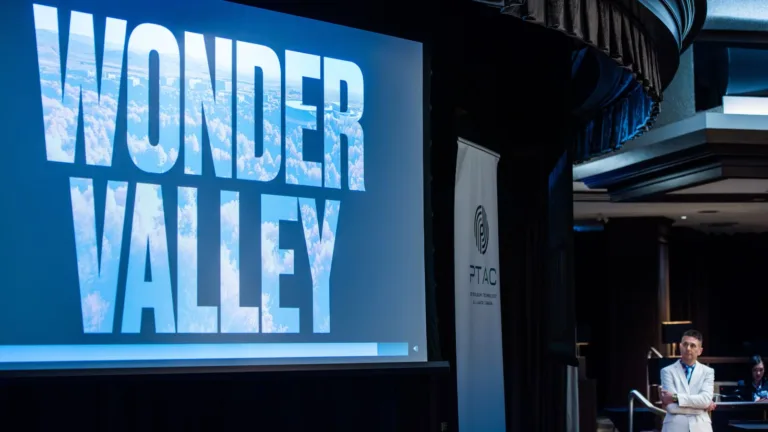
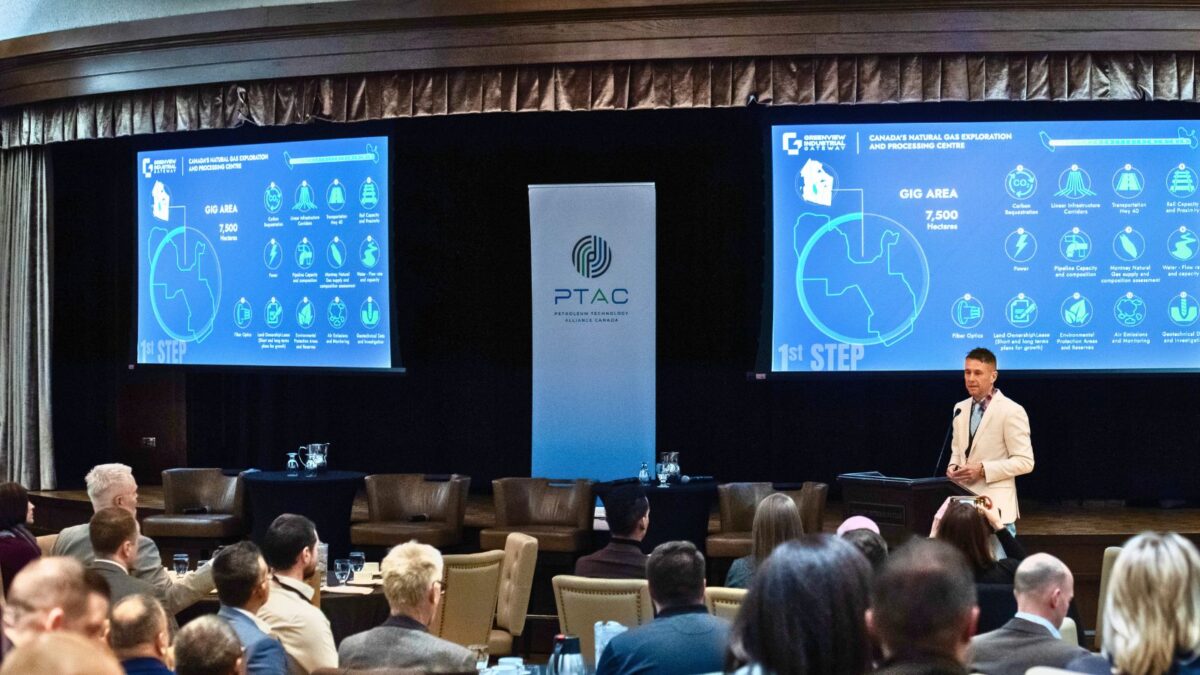
Kyle Reiling, Executive Director of the Municipal District of Greenview, described the moment during a presentation at the PTAC Digital Innovation Forum, where he outlined the scale of the proposed Wonder Valley data centre campus and the years of infrastructure planning behind it.
According to Reiling, the site could eventually support massive data centres supported by more than 1.4 gigawatts of electricity per phase. That’s roughly the amount of power needed to supply about one million homes. The master plan for the site is built on multiple development phases, with each phase representing an investment of roughly $12-$16 billion and requiring a construction workforce of as many as 12,000 workers at peak activity.
“We were up in the helicopter flying over these 14,000 acres,” Reiling said. “It was the end of September and all the leaves were varying degrees of red and orange. And as we’re flying over, literally, there’s deer and moose, and Travis Toews is looking at me like, ‘wow, everyone’s showing up today’.”
When the helicopter landed, one of the visiting developers immediately called a colleague.
They’d found what developers call a unicorn location: land connected and powered enough to host a hyperscale campus. These are large-scale facilities that house the computers running the Internet and artificial intelligence (AI).
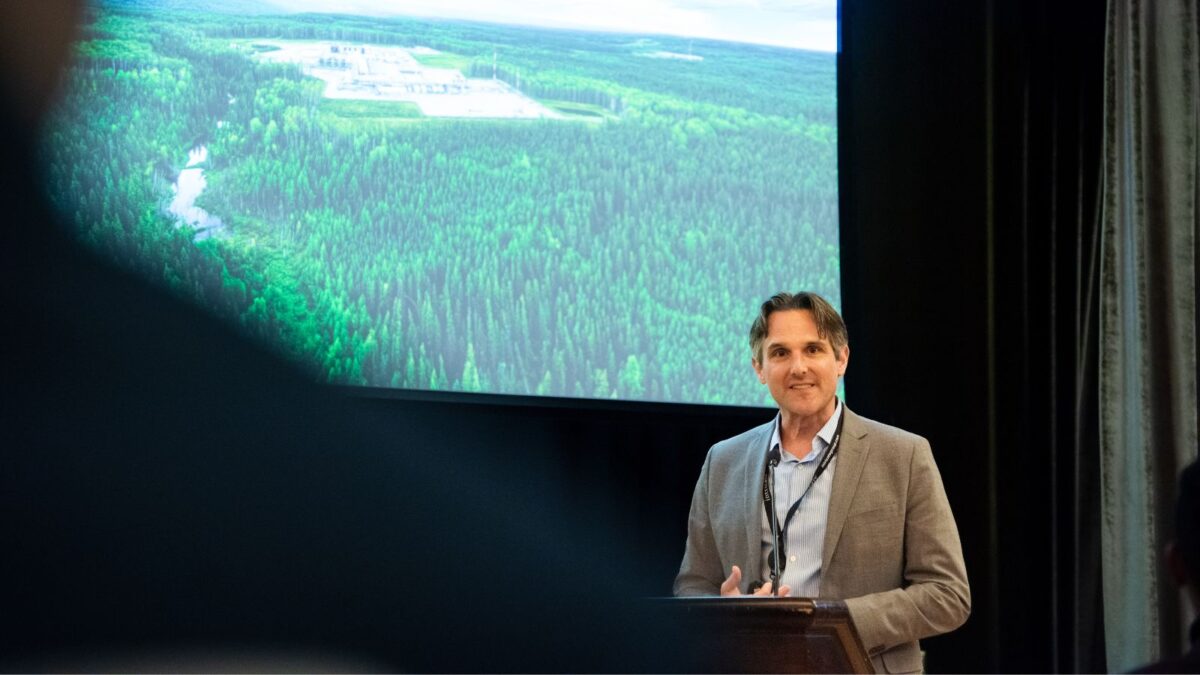
The site, now known as Wonder Valley, represents more than a decade of coordination between municipalities, regulators, landowners, and infrastructure planners.
As speakers at the PTAC Digital Innovation Forum noted, land in this race isn’t simply measured in acres. It’s measured in years. Large developers operate on compressed timelines because the demand for processing power is expanding faster than the physical buildings and wires required to deliver it.
While much of the global conversation focuses on software, the immediate bottleneck identified by presenters is the physical energy infrastructure required to run it.
Every additional year required for permitting, land assembly, or infrastructure routing introduces uncertainty that investors increasingly try to avoid.
Site readiness as a capital strategy
For major developers, time is a form of capital, and investors are often willing to pay a premium for locations where construction can begin immediately. In this emerging industry, site readiness plays a big role in determining where investment flows.
When a project begins on undeveloped land, the first phase is typically land assembly. Developers have to secure access and negotiate rights-of-way with dozens or even hundreds of landowners while also moving through environmental studies and zoning approvals, a process that can take years before construction is able to begin.
Sites that have already completed those steps are often described as a “ready-to-dig” industrial platform, where key approvals and infrastructure are in place before developers arrive. In an industry moving on fast timelines, that level of preparation acts as a form of de-risking, reducing the uncertainty that often slows large industrial projects.
Wonder Valley was designed with that in mind.

Reiling noted that the land has already been zoned for heavy industrial use, transportation access has been mapped, natural gas corridors have been registered across hundreds of parcels, and fibre optic connectivity has been installed to the gate.
For developers evaluating potential locations, those conditions remove years of uncertainty from the decision.
Greenview’s planning included securing a dedicated infrastructure corridor for natural gas. According to project maps displayed at the forum, the 286 land dispositions registered for the site create a continuous right-of-way linking the development area directly to Alberta’s NGTL natural gas transmission system.
Instead of negotiating access across hundreds of parcels, developers inherit a pre-approved corridor connected to one of North America’s largest natural gas networks. That coordination effectively turns raw land into a site ready to support large-scale industrial investment.
Delivering energy to the site remains one of the hardest parts of the equation. Developers aren’t only comparing power prices or climate conditions — they’re also evaluating how many unresolved steps remain between a site visit and the start of construction.
Locations where land assembly, corridor access, and energy servicing remain unresolved carry greater risk. Investors must account for delays, sequencing failures, and approvals that arrive well after major capital commitments have been made.
A ready-to-dig platform removes uncertainty and shortens the distance between the idea and the start of work.
Consensus among presenters at the event was that timelines matter because developers are choosing between jurisdictions when deciding where to invest.
In Alberta, aligning land access, infrastructure corridors, and regulatory approvals can take close to two years. Reiling highlighted a competitive gap, noting that competing jurisdictions such as Utah have moved similar large-scale developments from proposal to approval in as little as 12 weeks.
For companies evaluating where to build major facilities from the ground up, that difference in timelines can become a significant investment hurdle.

From molecules to capacity: The digital refinery
For decades, Alberta has exported raw energy resources to be processed and upgraded elsewhere. AI infrastructure offers a new opportunity to capture more of that value locally.
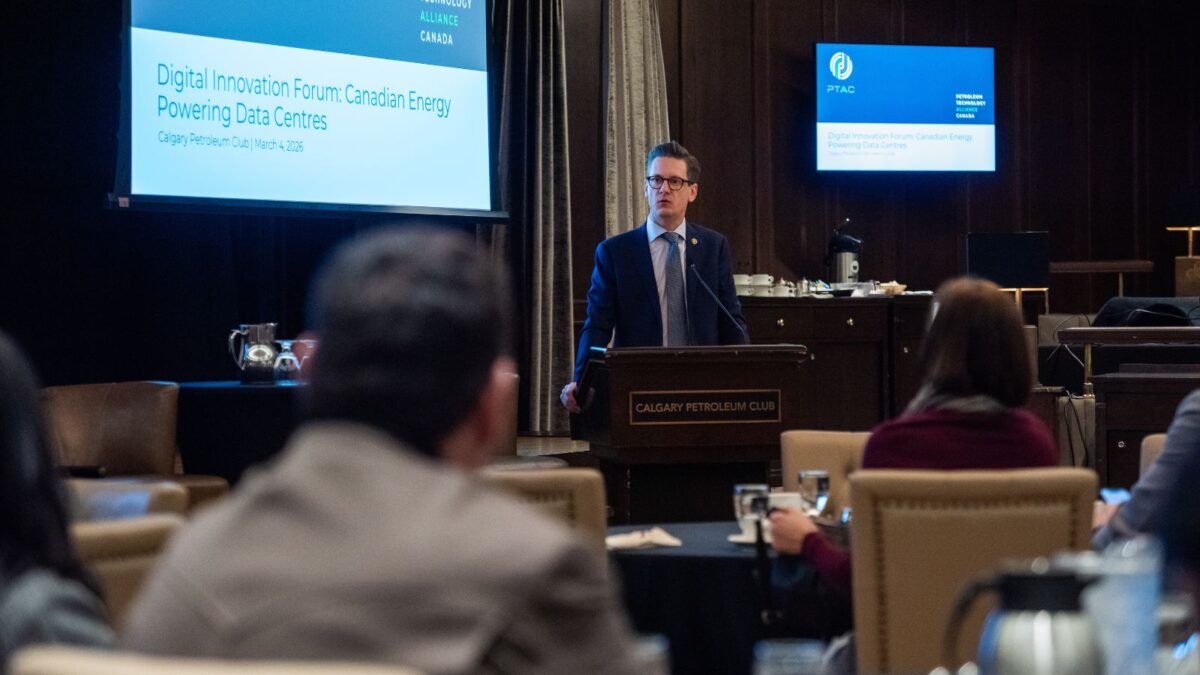
During his keynote at the PTAC Digital Innovation Forum, Alberta’s Minister of Technology and Innovation, Nate Glubish, used the analogy of a refinery to explain how data centres fit into the province’s energy economy.
“Why doesn’t Alberta do more refineries instead of just shipping their raw oil and gas everywhere?” he asked. “Why not add value to it first?”
Glubish used the concept to describe how this infrastructure layers economic value onto existing energy resources.
“This is like a digital refinery,” he said. “We’re taking the gas and adding value to it and turning it into electricity. We’re taking the electricity and turning it into compute. Then we’re taking the compute and creating new technologies.”
In this context, “compute” refers to the processing power produced by large clusters of specialized computer chips that run the calculations behind AI systems. Data centres generate that power through thousands of specialized processors running continuously.
“Alberta sits as one of the most attractive jurisdictions for this new integrated network that we’re all looking at — the energy-anchored compute network,” said Riley Prescott, Head of Power Markets Advisory at BBA Consultants.
Instead of replacing the traditional energy economy, data centres sit on top of it.
Natural gas provides reliable, round-the-clock electricity, while the province’s colder climate reduces the energy needed to cool those facilities. Natural gas and electricity are essentially turned into a new export: computing capacity.
Developers and policymakers at the event suggested Alberta’s data centre sector could represent $75-$100 billion in investment over the coming years.
For Alberta’s energy sector, this represents a new form of value creation built on the same infrastructure that has long supported the province’s energy economy.
The scramble for power and cooling
Artificial intelligence systems consume massive amounts of electricity and must run continuously. In Alberta, natural gas remains the only energy source capable of providing reliable power around the clock at the scale these facilities need.
For developers, this makes the province’s existing infrastructure highly lucrative.
“We talk a lot about the Alberta advantage, but we think of it more as the deep basin advantage for us,” said Nico Vandersalm, Lead of Emission Reduction Projects at Tourmaline Oil. “We’re spending $300 million a year for the last 10 years, and already have those relationships [across the power-generation value chain]. “I really think low carbon intensity, like natural gas, higher combined cycle turbines with carbon capture and storage can compete with renewable options that need very expensive battery backups.”
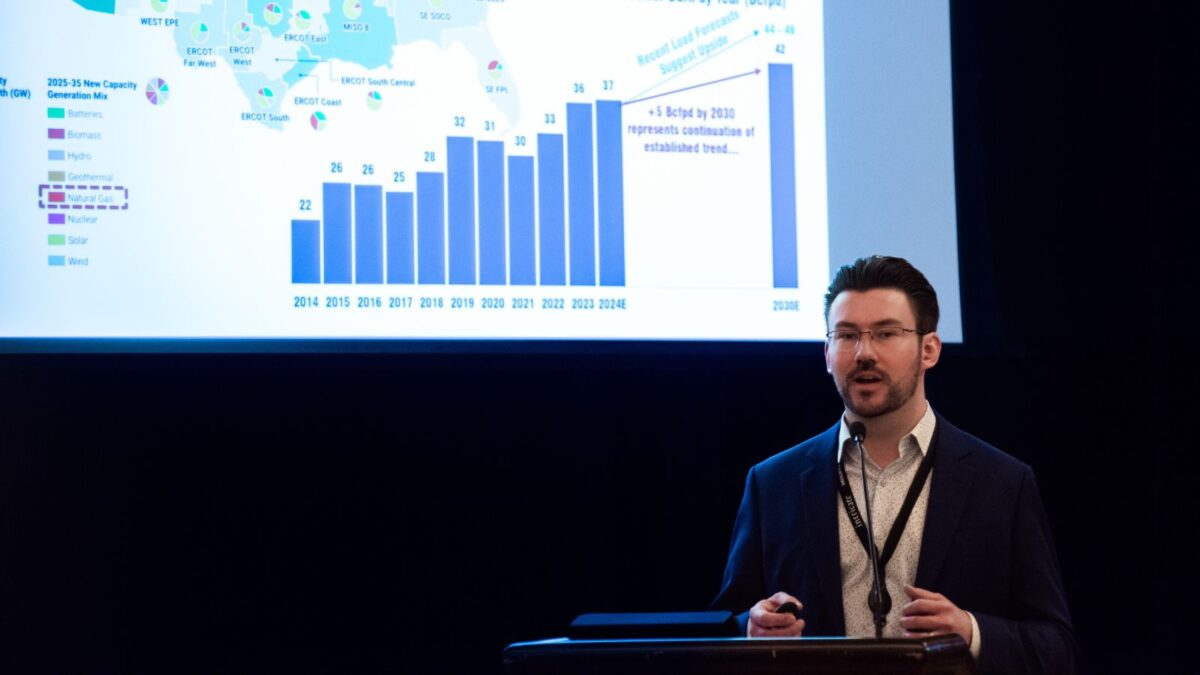
That demand has triggered a global scramble for generation capacity and equipment.
“In the last three years we’re seeing a 10x multiple in demand for turbines,” said Vandersalm. “Phase one was snapping up all available power in the U.S.. There’s such a demand for this power.”
Cooling systems represent another major challenge.
Processors generate a lot of heat, and between 20% to 40% of a data centre’s total energy demand can go toward cooling.
Alberta’s colder climate provides an advantage.
Facilities can rely on outside air for cooling much of the year, reducing the need for energy-intensive mechanical chillers. Modern facilities also rely on closed-loop cooling systems, which function like a car radiator. Coolant circulates through sealed pipes rather than continuously drawing fresh water from nearby rivers or aquifers.
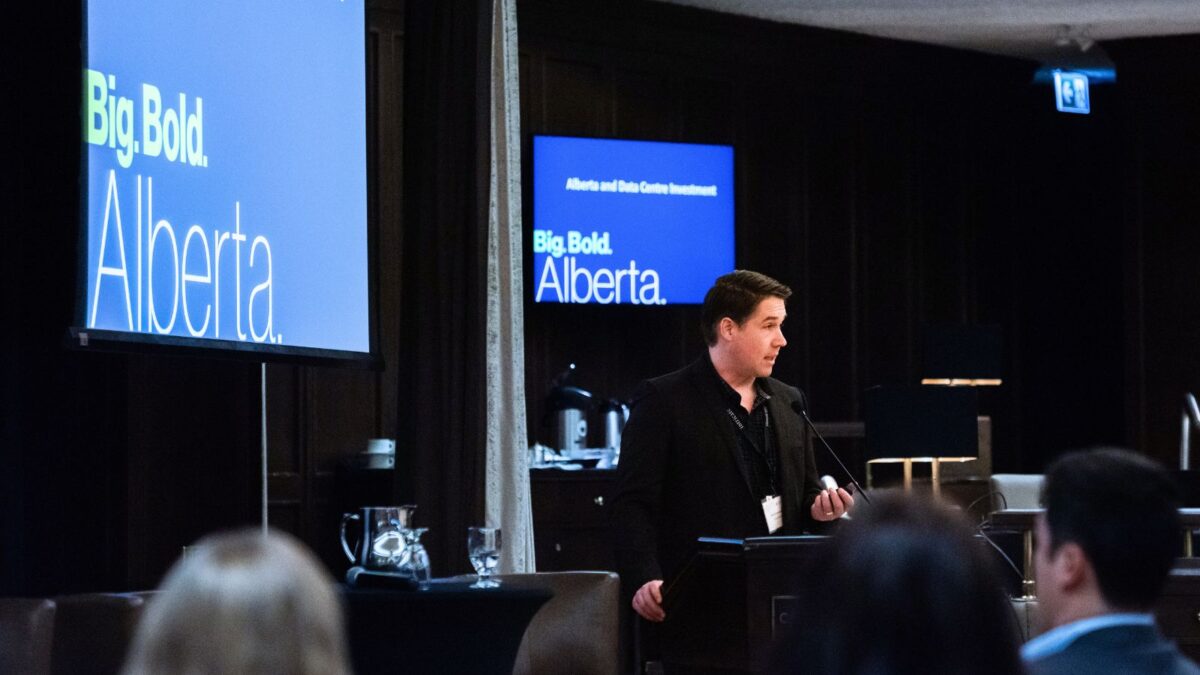
Neil Vande Bunte, Director of Technology and Investment Attraction at Invest Alberta, noted that Alberta facilities could reduce mechanical cooling by as much as 6,000 hours per year.
That’s roughly 250 days.
This creates a major advantage compared with facilities in warmer regions such as the southern U.S., where mechanical cooling runs far more often. Designing reliable fuel supply for on-site generation has therefore become a key technical requirement for many proposed projects.
In a province where water availability and local impacts are closely examined, cooling systems that rely on Alberta’s cold air rather than local water supplies can play an important role in whether a project gains public support.
The role of data centres in building new power infrastructure
The scale of electricity required by AI facilities means they can’t simply plug into the existing grid.
Provincial officials estimate the grid currently has about 3,000 to 4,000 megawatts of spare capacity. However, the government has capped new data centre connections at 1,200 megawatts to protect electricity supply for households.
For that reason, developers are encouraged to build their own power plants.

As Sean Murphy, Assistant Deputy Minister and Alberta’s Chief AI Officer, said at the event: “As the Internet grows, we’re very clear on the principle — large AI data centres must be contributing to the Alberta system, not [extracting from it].”
This means building natural gas plants that provide power directly to the facility. Because these facilities run at the same speed around the clock, they act as a stable customer for the grid.
Most industrial power loads ramp up and down based on production cycles, but data centres draw a flat, predictable amount of power every hour of the day.
For planners and investors, that steady demand makes it easier to finance new power plants and transmission lines. Long-term electricity purchases from large facilities create predictable revenue, which can justify building infrastructure that might otherwise be too expensive.
One example of that scale was highlighted by Minister Glubish, who said a single large data centre project could contribute roughly $150 million per year in transmission payments alone, helping support the cost of Alberta’s electricity system.

Solving the geographic mismatch
Securing reliable power is only part of the equation when building AI data centres. Developers must also solve a geographic problem: Alberta’s energy resources and digital infrastructure are not located in the same place.
Natural gas production is heavily concentrated in the northwest of the province, while fibre networks, grid infrastructure, and major population centres sit farther south along the Edmonton-Calgary corridor.
Vande Bunte of Invest Alberta explained that bridging that distance requires new infrastructure, forcing developers into a practical choice: move electricity, move gas, or extend fibre networks.
Those choices are not made on a blank slate.
Natural gas in Alberta is gathered, processed, and transported through infrastructure that is already built and operated across the region. For developers entering from other jurisdictions, that means new projects are not built onto a blank slate.
They need to work with the energy companies already operating in the area. Midstream operators, producers, and infrastructure owners control how gas is supplied, processed, and delivered, and projects move forward through alignment with those systems.
As a result, decisions about where and how to build are shaped not only by land and power, but by how a project connects into infrastructure that’s already in place.
From there, the challenge becomes physical again.
Each option requires new physical infrastructure and regulatory approval. Transmission lines, pipelines, and fibre routes must cross land through secured rights-of-way, and connect into existing systems. Vande Bunte’s presentation illustrated that the gap between Alberta’s resource supply and its digital demand can stretch roughly 500 kilometres.
This is one of the central infrastructure challenges facing Alberta’s data centre opportunity, speakers at the event shared. Developers have to decide whether to transport fuel to where data centres already cluster, move electricity generated near gas fields toward urban corridors, or extend fibre capacity so new facilities can be built closer to energy supply.
Each option introduces its own timeline and permitting complexity. Pipelines and transmission lines require new approvals and land access, while fibre expansion must meet the performance and redundancy standards required by hyperscale operators.
As a result, solving the final stage of energy delivery is increasingly becoming the defining coordination challenge for projects seeking to connect Alberta’s resource base with its emerging digital infrastructure.
Designing projects with communities in mind
In Alberta, building a large industrial project does not begin with engineering drawings alone. It also requires relationships on the ground.
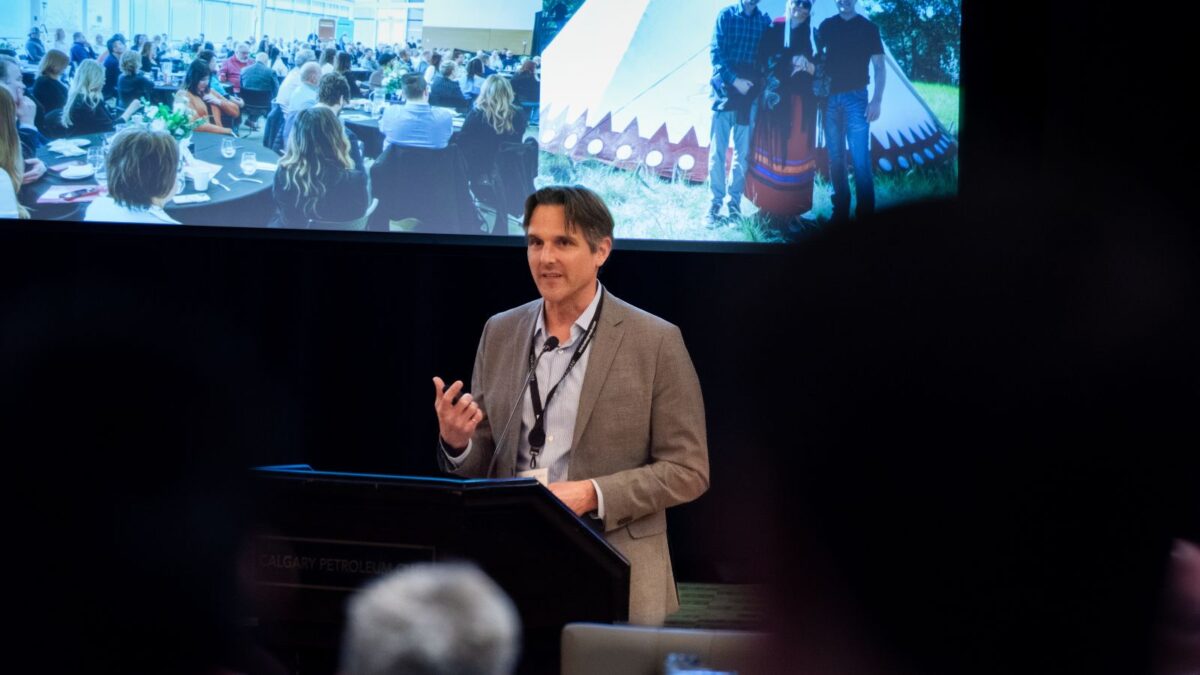
Brett Wightman, Manager of Innovation and Sustainability at CSV Midstream Solutions, said the province can look almost ideal to outside developers evaluating locations for large data centres.
“When a data centre developer comes from outside Alberta and looks at this market, they see a spreadsheet that almost seems too good to be true,” Wightman said at the PTAC Digital Innovation Forum. “We’ve got some of the lowest-cost natural gas in North America. We have a cold climate that dramatically reduces cooling costs. We have available land and a supportive government. Every line in that spreadsheet checks out.”
But many developers, he said, encounter an obstacle once projects begin moving toward approvals.
“They go and apply for permits with the understanding they’re going to be pushing dirt soon after,” he said. “That’s when projects stall, because they missed the line that isn’t on their spreadsheet.”
That missing line is community acceptance — the trust built with the people who live closest to the project.
At CSV, that work is framed through the company’s Creating Shared Value approach, which focuses on building projects alongside communities rather than simply building in them.
“We started with coffee,” he said, describing how conversations began before construction on one of the company’s recent gas plants. “We sat in living rooms. We met landowners who had farmed that land for three generations.”

Trust builds slowly as communities weigh risks to their land, water, noise, and traffic. Residents want to know that a project will not be a burden on their resources or their peace.
For CSV, that approach translated into practical design decisions that reduced impact on neighbouring landowners. At the company’s Albright gas plant, CSV adjusted facility layout, managed noise and lighting, and maintained ongoing communication with nearby residents as construction moved forward.
The importance of community support and acceptance has already shaped how some projects are evaluated in Alberta.
In Olds, a town roughly 90 kilometres north of Calgary, a proposed $10-billion data centre project recently drew scrutiny from residents and regulators over issues including water use, emissions, and potential noise from cooling systems. The Alberta Utilities Commission ultimately declined the application, citing gaps in the information provided and the consultation process.
That example underscored the point Wightman raised at the event: even when a project looks strong on paper, its success often depends on how well developers address the concerns of the communities where that infrastructure will operate.
Indigenous participation and technical stewardship
At the PTAC Digital Innovation Forum, speakers also discussed how major infrastructure projects could be developed with Indigenous Nations as partners and owners rather than simply as participants in consultation processes.
Daniel Mistaken Chief, a member of the Blood Tribe and co-founder of CyberCloud-AI and Indigenous Datacentres, described a project currently being developed with the Nation that would establish a 100-megawatt data centre on Blood Tribe land.
The proposal is structured so the Blood Tribe would hold majority ownership from the outset.
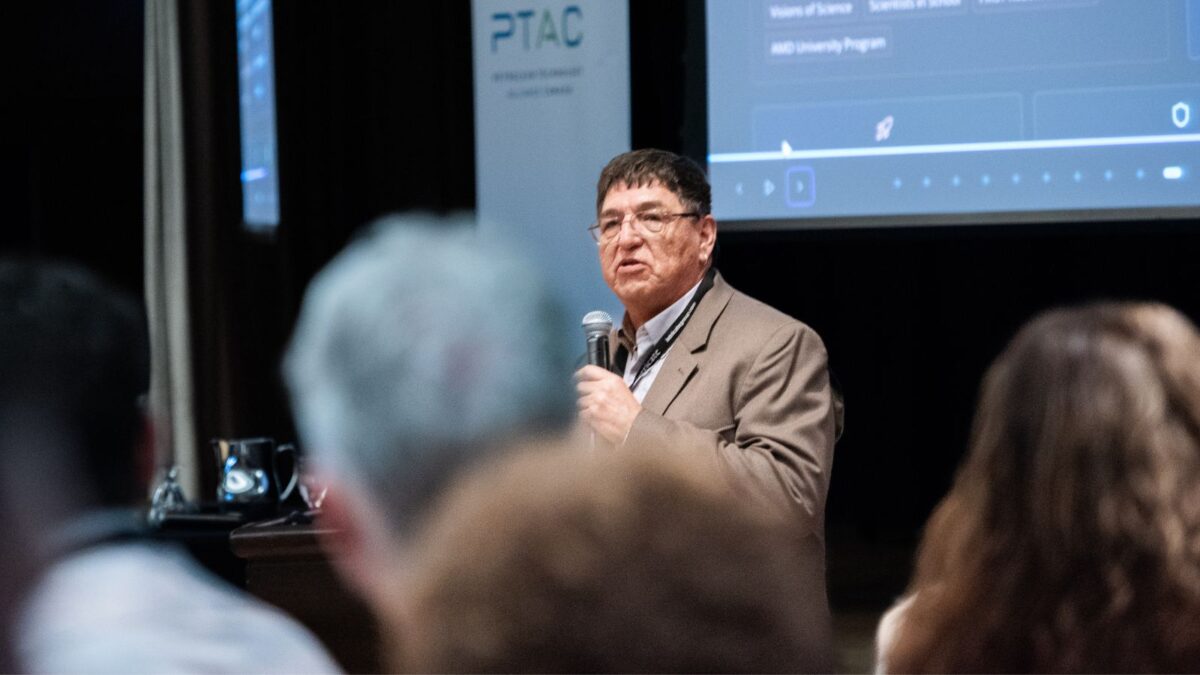
“First Nations hold those keys,” he said. “They own the land, they own the resources, they hold the authority for the territories they live in.”
Mistaken Chief said projects should be structured so Nations are partners and owners rather than simply receiving small payments in exchange for approvals.
The initiative, which has been under development for about a year, is intended to give the Nation a direct stake in the infrastructure developed on its land.
He said the project is intended to create new economic opportunities for the Nation while supporting infrastructure on its lands.
Mistaken Chief outlined how the proposal also includes plans for a power plant to support the facility so the energy infrastructure could eventually support other projects within the community.
Over time, the project could help establish new digital and energy infrastructure that enables additional economic development on Blood Tribe land.

Energy corridors and rural land use
For rural landowners, the arrival of new energy infrastructure can also represent a different kind of economic stability.
Eric Steeves is a fifth-generation farmer in southern Alberta. At the event he said his family has farmed through more than a century of drought cycles, and increasingly unpredictable weather has forced many farmers to rethink how their land generates income.
“If I had to sum it up in one word, it would be survival,” Steeves said. “We’ve been farming in southern Alberta for five generations, and every generation has had drought.”

Those pressures have pushed some farmers to look at their land through a broader lens.
In southern Alberta, the same conditions that make farming difficult in some years — strong winds, long hours of sun, and open land — can also support energy development.
“We get too much wind and too much sun,” Steeves said. “That hurts our yields for farming. So why not flip our land and look at it from the lens of energy production?”
That reality matters because the infrastructure needed to power new industries does not appear in empty spaces. Transmission lines, pipelines, and generation facilities often cross privately owned farmland. Farmers and ranchers are therefore part of the equation when large energy and digital infrastructure projects are planned.
In his view, rural landowners, energy producers, and the technology sector all have a role to play if Alberta wants to build the power systems required to support emerging industries.
Steeves said the opportunity is to bring those worlds together.
“If we do this right, there’s a perfect centre between these industries that complement each other quite well,” he said.

The race for coordination
Across the event, speakers returned to the same underlying point: Alberta already has many of the pieces required to support large-scale digital infrastructure.
The province has natural gas resources, available land, experienced energy developers, and communities that understand how large industrial projects work.
The challenge is bringing those pieces together quickly enough to compete, and building these facilities requires aligning several moving parts at once.
Land must be assembled and prepared. Energy must be delivered at an enormous scale. Infrastructure corridors must connect gas, electricity, and fibre. And projects have to be built with the support of the communities that live closest to them.
Each of those steps takes time, so investors are increasingly choosing locations where that work has already begun.
Wonder Valley illustrates what that preparation can look like. Years of work assembling land, securing corridors, and planning infrastructure have already turned a remote stretch of northern Alberta into a site that developers can evaluate immediately.
From the air, the landscape looked like open land. But on the ground, it represents more than a decade of planning to make large-scale infrastructure possible.
In a market where developers are searching for places that are ready to build, that preparation can determine where the next wave of investment lands.
