
24-HOUR EMERGENCY LINE: 1-844-808-4904
What the power engineering lab is building for oil and gas in Grande Prairie
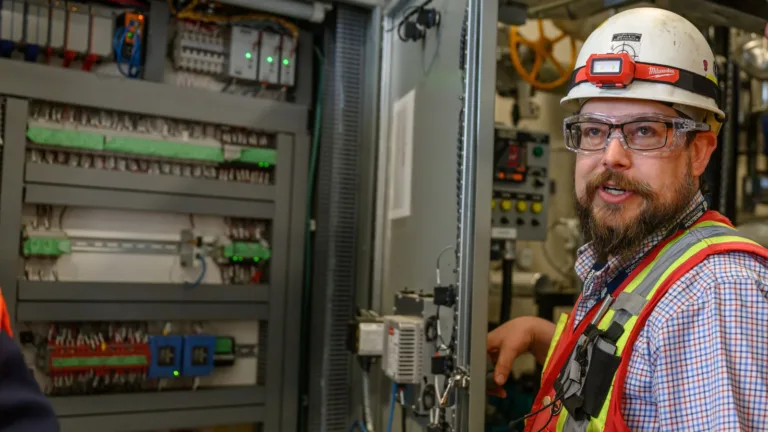
“What’s important for industry is that students here get to understand and work in an environment that’s going to be similar to what’s going to be in the field,” said Cindy Park, Vice President, External Relations at Northwestern Polytechnic (NWP).
Park is touring us through the new power engineering lab at NWP’s Grande Prairie campus, which opened in September 2025.
What Park keeps returning to as she walks the space is how closely it mirrors the environments students will eventually work in.
Boilers feed steam to turbines. Control panels are wired into instrumentation. Valves, piping, and controls are connected as a single operating system. The equipment is industrial scale and arranged to behave the way gas plants and processing facilities do across Northwestern Alberta.
The lab is housed within the Spartan Controls Northwestern Centre for Industrial Automation & Innovation, a $16-million applied training facility developed through a long-term partnership between Northwestern Polytechnic and Spartan Controls. Inside it, the power engineering course supports training tied directly to oil and gas operations that already define the Grande Prairie region.
For midstream operators working in the region, including CSV, facilities like this are where workforce readiness becomes practical. People hired into local gas plants are stepping into sites built around integrated control systems, where engineering decisions, automation, and operations are closely connected. Training environments that mirror those conditions shorten the transition from classroom learning to real site responsibility.
Across the Grande Prairie region, midstream gas processing facilities operate with high levels of automation and integrated control systems. Within these plants, the day-to-day work of an operator requires a clear understanding of how pressure, flow, and control logic interact across an entire site rather than within a single isolated unit.
In the Montney, that interdependence is central to daily operations.
That interdependence leaves little room for partial understanding. Operators are expected to recognize how a change in pressure, flow, or control logic in one area can ripple across an entire facility. Learning that kind of systems thinking on a live site carries risk. Learning it in a controlled environment changes how quickly people gain confidence and judgment.
When learning programs reflect the actual systems people work with on site, operators are better prepared for the complexity of running and maintaining those facilities.
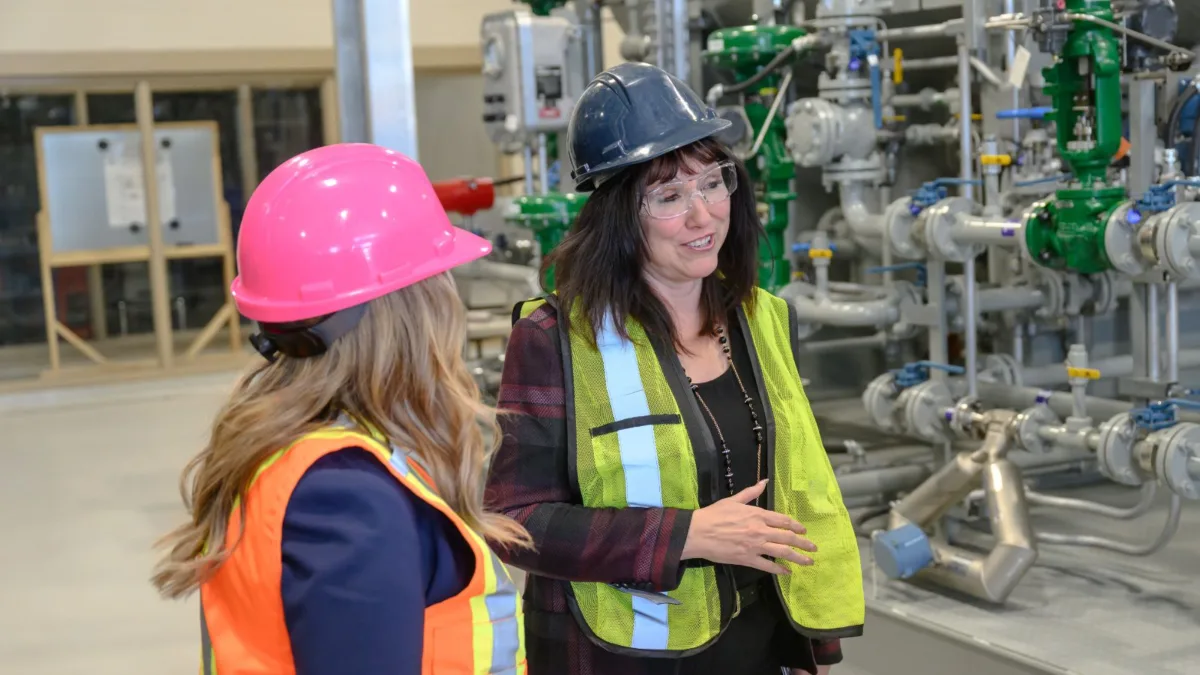
A space designed to behave like a site
Park talks about the lab in terms of behaviour rather than features.
That priority shaped how the lab was built. Instead of standardizing around a single setup, the space gives students a range of equipment they are likely to encounter in real facilities.
“It’s not just one brand. It’s multiple brands,” Park said, adding that it gives students a chance to work on a variety of equipment.
The space itself was designed to support that kind of learning. It’s large enough for multiple students to work at the same time, and the labs are physically connected so learning is practical and doesn’t happen in isolation.
“In real life, something fails in one area, but you’re on the radio to somebody else in another part of the site,” Park said.
That same coordination happens here. Students work in one lab while communicating with others, diagnosing issues together and responding the way operators do on an active facility.
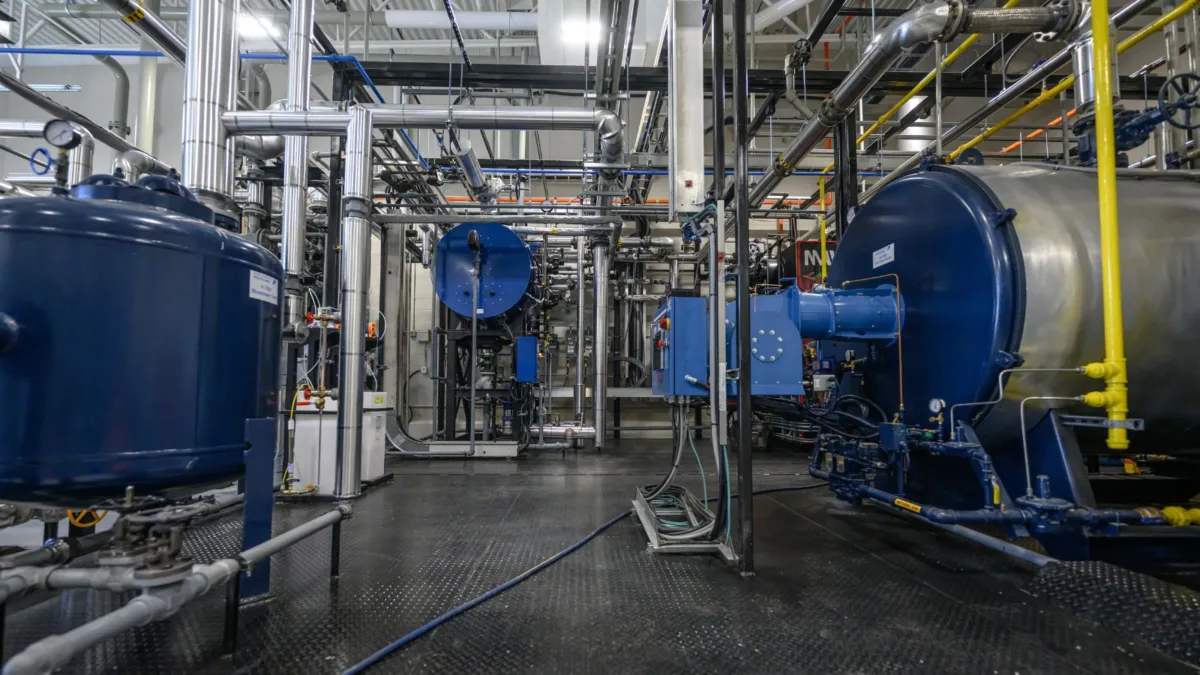
The lab is also designed to respond to change. Instructors can introduce faults, require manual intervention, and shut systems down in controlled ways that would be impractical on a live site.
“In real life, you can’t actually shut down these systems because it would impact how facilities work,” Park said. “Here, students can experience those situations and learn how systems respond.”
Park also points to what the lab changes structurally for people pursuing power engineering in the region.
“One of the biggest things is third class,” she said, referring to the certification level required to operate larger and more complex facilities, including gas processing plants. “Before, students had to leave Grande Prairie to go and complete that.”
Providing that level of training locally keeps experienced workers connected to the region’s midstream facilities and reduces the need to leave work, families, and the community in order to advance.
Learning responsibility through practice
For instructors, the value of the lab shows up in how students are able to engage with the work.
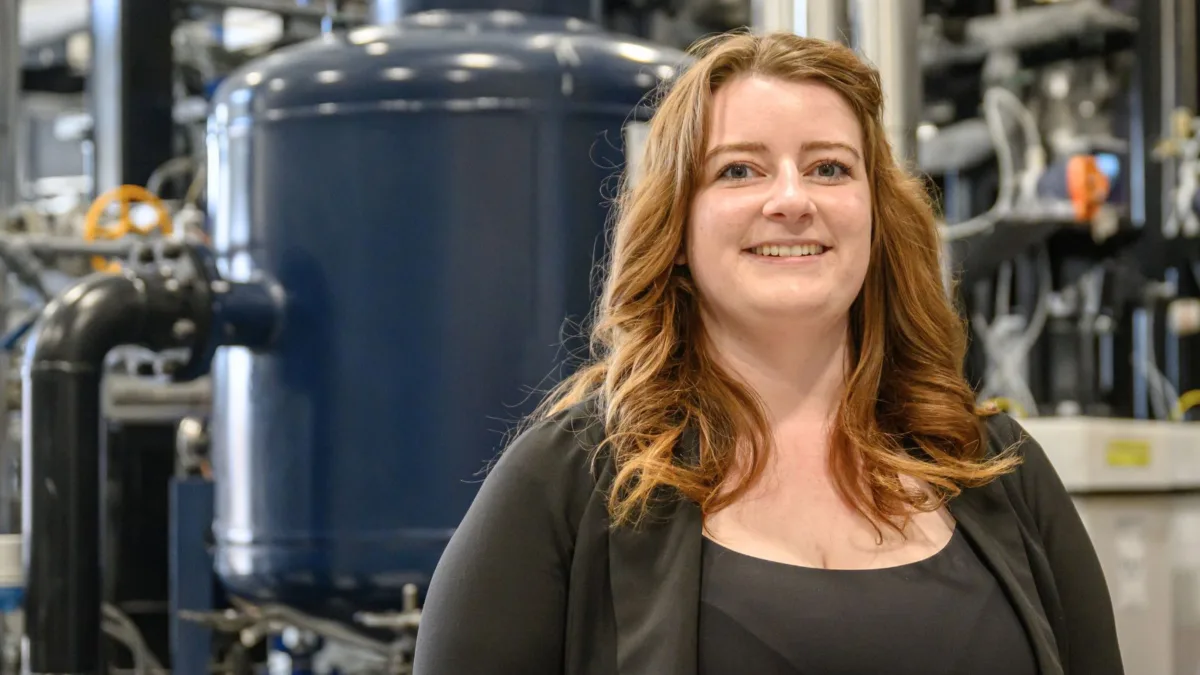
Brooklyn Klassen teaches power engineering and focuses on creating space for learning to happen under real conditions, without putting operating facilities at risk.
“We’d rather you make a mistake in our lab and learn that way than when you’re out in industry and there’s real consequences for it,” she said.
The lab allows students to work directly with operating systems and see how equipment responds when something changes. That experience builds familiarity with the kinds of environments they will eventually work in.
Park connects that hands-on design to a regional reality. Many people training for oil and gas work here are balancing more than coursework.
“Many of the students that are in the trades have their full lives at home that they have to be responsible for their mortgage payments and their children and all of those things,” she said. “So having those opportunities here for our students at any age is really great.”
She also frames the lab as a shared regional asset.
“We’ve had a huge amount of support with industry support,” Park said. “It belongs to the whole region.”
That shared ownership extends beyond students.
“We’re going to also have these opportunities for industry to even use the space if they want to do an education session,” she said.
In a region where oil and gas infrastructure is long-lived and deeply embedded in the local economy, those choices add up. Training stays close to the work, certification pathways stay local, and industry gains access to people who have learned inside systems that behave like real sites.
The capability required to operate and maintain complex facilities remains rooted in the communities that depend on them.
